Friday, March 23, 2012

Two Charcoal Fires:


The Rehabilitation of Peter
© 2010 Bert Gary

If you go to a therapist for traditional psychoanalysis, one of the things you will be asked to explore is the way in which the unhealed wounds from your past are still hurting you today. The goal of the analyst is to help you find and reenter the pain of unresolved traumas. Like a physical wound that will not heal without treatment, emotional wounds that are ignored or denied will fail to heal.

A key purpose then of psychoanalysis is to help you find the courage to scan your past for memories that are unhealed and unresolved, then to help you reexamine and re-experience those wounding moments so as to acknowledge and release the pain. Sigmund Freud is credited with developing psychoanalysis in the 19th century, and modern counselors of all varieties today still operate under the basic assumption that those who are cut off from their pasts cannot heal.

Should Freud be credited with the insight that one has to revisit one’s trauma in order to heal? I seriously doubt it. There is a story in the Bible that suggests that this notion was alive and well in the 1st century. And it is John 21:1-17 that tells us that Jesus had this kind of healing in mind for his disciple, Peter. The “therapy” took place on a beach before a charcoal fire.

The First Charcoal Fire

Peter and an unnamed disciple (usually presumed to have been John) followed Jesus and the temple police who arrested him at Gethsemane. Jesus was taken by night for questioning to Annas’ house; Annas was the high priest Caiaphas’ father-in-law. Because John was known to Caiaphas, he was allowed into the courtyard of the house for the proceedings, leaving Peter outside the gate. But because John was already “in,” he was able to influence the woman guarding the courtyard gate to admit Peter. It was a cold night. Peter joined some of the priests’ slaves and policemen warming themselves around a charcoal fire.

John 18:18  Now the slaves and the police had made a charcoal fire because it was cold, and they were standing around it and warming themselves. Peter also was standing with them and warming himself.

Imagine, he's warming his hands with slaves and policemen. This is the context—Peter at a charcoal fire—for an event that Jesus predicted in all four gospels.

John 13:37-38   Peter said to him, "Lord, . . . I will lay down my life for you."  38 Jesus answered, "Will you lay down your life for me? Very truly, I tell you, before the cock crows, you will have denied me three times.” (See also Matt 26:34, Mk 14:30, and Lk 22:34.)

By the glow of charcoal embers, Peter, according to all four gospel accounts, denied three times that he knew Jesus.

John 18:26-27   One of the slaves of the high priest, a relative of the man whose ear Peter had cut off, asked, "Did I not see you in the garden with him?"  27 [A third time] Peter denied it, and at that moment the cock crowed.

Luke 22:61-62   The Lord turned and looked at Peter. Then Peter remembered the word of the Lord, how he had said to him, "Before the cock crows today, you will deny me three times."  62 And he went out and wept bitterly. 

Peter left that place weeping bitterly (Matt 26:75; Lk 22:62). This event had immediate and lingering effects on Peter, as the Bible tells it.


Peter Resigns

Mark records that, in the tomb of Jesus, Peter was mentioned by name by “a young man dressed in white,” whom we presume was an angel. The young man was seated in the tomb when the women entered it. He told them not to be alarmed, that Jesus had risen, and then he gave them an assignment:

Mark 16:7   “. . . go, tell his disciples and Peter that he is going ahead of you to Galilee; there you will see him, just as he told you.” (emphasis mine)

Apparently Peter had “quit.” The young man told the women to give a message to the disciples, and to also give the message to Peter. If Peter still considered himself to be a disciple of Jesus, there would have been no need to mention him separately.

There is no way to read Peter’s mind concerning this. However, because he is not named as a disciple by the young man, the strong implication is that, in Peter’s mind, no one who denies a man three times can consider himself to be a disciple of that man; to deny Jesus is to deny discipleship.

So Peter left the charcoal fire a broken man, weeping bitterly, and all alone. Having denied his Lord, thereby canceling his discipleship, Peter was no longer an associate of John or Andrew or Matthew or the others. He was isolated with only his failure and grief for company. That is a lot of pain to be carrying alone.

The news of Jesus’ resurrection, however, caused Peter—against all odds—to reunite with the disciples. Peter lost a footrace with John to the empty tomb. The Lord later appeared to them all behind locked doors, with Peter present. What brought him back? What made it possible for him to show his face?

There is an appearance of the Lord, often overlooked, that may have brought Peter out of hiding and back into the circle of old friends. Luke tells us that Jesus, on the day of his resurrection, appeared alone to Peter, though Luke does not record the details of the event. Cleopas and another disciple were going home to Emmaus when they were visited by the risen Lord (Lk 24:13-33). They ran back to Jerusalem to find the apostles to tell them. The disciples from Emmaus seemed surprised to find the eleven all gathered together in the same place, and before they could share their good news, the eleven told them that the Lord had appeared to Simon Peter.

Luke 24:33-34   That same hour they got up and returned to Jerusalem; and they found the eleven and their companions gathered together.  34 They were saying, "The Lord has risen indeed, and he has appeared to Simon!"

Paul confirms this—that the Lord appeared individually to Peter.

1 Corinthians 15:3-5   For I handed on to you as of first importance what I in turn had received: that Christ died for our sins in accordance with the scriptures,  4 and that he was buried, and that he was raised on the third day in accordance with the scriptures,  5 and that he appeared to Cephas, then to the twelve. (emphasis mine)

Jesus nicknamed Simon “Cephas” in Aramaic, which means rock. Cephus in Greek is Petros. Petros in English is Peter. Simon Peter might not have been with the other ten when Jesus appeared to them. But apparently Jesus wanted him there. Perhaps that is why Jesus appeared to Peter alone first. Peter was torn from his isolation and self-loathing by something. And that something would have had to have been something dramatic. According to Luke 24:33-34 and 1 Corinthians 15:3-5 above, it was: Jesus rose from the dead and appeared to Peter and talked to him. The result? Peter went to see his friends and gave them the news.


Peter Goes Back To His Old Job

Although Peter saw the risen Lord alone and then two more times with the other ten behind locked doors in Jerusalem, Peter nonetheless decided to return to the Sea of Galilee, return to his home, and return to his old job.

John 21:3   Simon Peter said to them, "I am going fishing." They said to him, "We will go with you." They went out and got into the boat, but that night they caught nothing.

I do not want to read too much into this, but his return to former things suggests that while Peter had reunited with his friends, he clearly had not decided to continue in Jesus’ ministry. Quite the opposite! He returned to his trade, fishing. He still may not have considered himself to be worthy of discipleship. He went on no missionary journey. On the contrary, he went back to his former life, almost as if nothing had happened.

Not wanting to project 21st century psychological awareness onto biblical characters, I am nonetheless aware of the yearning of wounded, grieving people to return to normalcy, to routine, as a source of comfort. Perhaps this is in part Peter’s motivation. Or perhaps he just needed the money.

My heart is cheered—though I say this with hesitation—that Peter’s colleagues went with him on the boat. They too could have simply needed the money. Or perhaps they were just bored. But I see more than that. I see Peter’s friends accompanying their troubled friend out of love and concern. Thomas, Nathaniel, James, John, and two others heard Peter say, “I’m going fishing.” Peter did not invite them along. He was going whether they joined him. But they did not let Peter go alone. This to me hints at both their concern for Peter’s spiritual well-being and their desire to support him.

Fishermen fished by night on the Sea, and they stripped down to do it. After a full night’s work—work that I hope was therapeutic for Peter and his friends—John specifically records that they caught nothing. This, for me, harkens back to the Lord’s original call on Peter’s life. He is not supposed to be fishing for fish anymore, but to be fishing for people.

Matthew 4:18-19   As he walked by the Sea of Galilee, he saw two brothers, Simon, who is called Peter, and Andrew his brother, casting a net into the sea -- for they were fishermen.  19 And he said to them, “Follow me, and I will make you fish for people."

That they caught no fish seems a subtle reminder that Peter’s call to discipleship, his call to fish for people instead of fish, was still in tact, at least from the Lord’s end. Peter may no longer have believed himself to be a disciple, to be worthy of discipleship, but the empty nets may have been a divine message: Going back to fishing for fish is just not going to work, Peter.

John’s Gospel alone (Chapter 21) tells this story of an additional resurrection appearance to seven fishermen on the shore of the Sea of Galilee. The sun rose, and the men in the boat saw “a man” on the beach. He asked the question that torments all fishermen: Did you catch anything? No, they said. Put your nets out on the right side of the boat and you will, said the man.

John 21 reminds us of a previous event recorded in Luke 5, when Jesus was finished teaching a crowd on the shore while sitting in Peter’s boat. On that occasion Jesus told Peter to launch out into deep water and put down his nets. It was the middle of the day, the wrong time to fish. And deep water is not the best place on the Sea of Galilee for a catch. So Peter complained about these absurd fishing instructions given to him, a master fisherman, by a land-loving construction worker from land-locked Nazareth. But Peter did it anyway, and they caught so many fish that the nets began to break and the boat began to sink. Peter’s response is most interesting.

Luke 5:8   But when Simon Peter saw it, he fell down at Jesus' knees, saying, "Go away from me, Lord, for I am a sinful man!"

Even then, Peter saw himself as unworthy. Given his three denials, how much more unworthy Peter must have felt, regardless of Jesus’ resurrection appearances.

Back to John 21, Peter and the boys did as “the man” on the beach instructed, and they took in a haul of 153 fish (verse 11), yet this time the net surprisingly did not break. The specific number of fish and the specification that the net did not break are interesting details that beg for interpretation, so I will give it a shot.

The interpretations of the 153 fish are numerous and inconclusive. It is interesting, however, that 153 is the sum of the numbers 1 through 17, and 153 dots can be arranged into an equilateral triangle with 17 dots on each side.

·
··
···
····
·····
······
·······
········
·········
··········
···········
············
·············
··············
···············
················
·················

Is this a veiled reference to the Trinity, or perhaps a symbolic reference to Jesus’ parabolic “fish of every kind,” (Matt 13:47—see below) comparing the kingdom to a complete haul of humanity? If the latter, then we are back to Peter’s call to discipleship being one as a “fisher of men.” Perhaps the promise of the 153 fish is that the kingdom catch will be full, and the kingdom nets will not break.

Matthew 13:47  “Again, the kingdom of heaven is like a net that was thrown into the sea and caught fish of every kind . . .”

“The beloved disciple,” whom we presume to be John, had to tell Peter the obvious. “The man” on the beach was the risen Lord. Was Peter just dim, or does grief dull one’s perceptions? In either case, Peter could not wait for the boat to bring him ashore. Showing that he still had passion for Jesus, he threw on his clothes, dove in, and swam for it.

The Second Charcoal Fire

What did Peter see as he emerged from the cold water? There on the beach was Jesus and a charcoal fire. Was he yet again too dim or grief-stricken to see it? Not likely, because he no doubt also smelled the unforgettable odor of burning charcoal. Smells trigger memories like nothing else. How is it that we have missed this, though many of us have read it repeatedly over the years?

There are only two charcoal fires (anthrakia) in the Gospel of John. Moreover, there are only two charcoal fires in the entire Bible, and Peter is at both of them. Jesus had not gathered driftwood when he got to the beach that morning. He brought charcoal. What was he up to?

Jesus invited them all to breakfast. It is hard to deny the Eucharistic overtones, and this harkens back to “the last supper” when Jesus predicted that Peter would deny him three times before the cock crowed. This seems beyond coincidence.

Around the first charcoal fire at Annas’ home, Peter denied Jesus three times. Around the second charcoal fire on the beach, Jesus asked Peter if he loved him three times, and told Peter to feed his flock three times. Certainly the second charcoal fire was no accident. And the fact that Jesus likewise asked Peter exactly three times if he loved him, and commissioned him exactly three times to return to a missionary ministry were not accidents either. This event has been called “threefold grace for a threefold denial.”

The first two times Jesus asked Peter if he loved him, the word for love in the original Greek is agape—meaning the kind of unconditional love with which God loves. In Peter’s two replies to this question, however, he affirmed that he loved Jesus, but the word for love that Peter used in the original Greek is phileo—meaning the kind of loving affection one has for a friend, as in a “brotherly love,” thus the city of Philadelphia means “city of brotherly love.” Yet when Jesus asked Peter the third time—Do you love me?—Jesus gently accommodated Peter. Instead of using the word agape that time, Jesus changed to phileo, communicating that while he wants Peter’s agape, Peter’s phileo will do. And just as Jesus abandoned agape for phileo, note that Jesus also abandoned his fishing metaphor for a new one—shepherding—sensing perhaps that a new image for Peter’s ministry was needed, one that would carry him far beyond the Sea of Galilee.

John specifically says that Peter was grieved when Jesus asked him a third time whether he loved him (Jn 21:17), even though Jesus accommodated him by changing the word from agape to phileo. One might assume that Peter was grieved merely because of the repetitions of the question, as if Jesus did not believe him. But I am convinced there is oh-so-much more to that word grieved. The Greek word is lupeo. It means hurt, pained, injured, distressed, troubled in heart, sorrowful, deeply sorry, and sad. It can even mean “in tears.” What if Jesus’ third question connected Peter to his third denial, to the smell of charcoal in cold darkness of Annas’ courtyard, to the sound of a cock crowing? What if it is indeed tears of grief, the grief of a man returning to an earlier fire to re-experience the bitterness of those Jerusalem tears? And moreover, what if that is exactly what Jesus intended on the beach by the Sea? What if he intended Peter’s return to a charcoal fire to heal him from his crippling lupeo?


Jesus Christ: Psychoanalyst?

Again, I resist projecting 19th – 21st century psychological awareness onto unsuspecting 1st century biblical characters. Yet doing so is unnecessary to make this observation: Modern psychoanalysis and other therapies help people heal from past wounds by returning them to those wounds to face them; Jesus did the same for Peter by literally returning him to a charcoal fire. Call it psychoanalysis or not, Jesus helped Peter to heal.

This story has been called by many “The Rehabilitation of Peter.” I like that. For this story is not just a story of Jesus redirecting Peter back to discipleship and ministry. It is also a story of the Lord’s tender healing of a wounded friend.

[All biblical quotes are from the NRSV.]


Tuesday, December 13, 2011

When Was Jesus Born?


June is identified as the month when sheep would be taken into agricultural fields to graze on stubble following the wheat harvest. Such fields were usually enclosed with a low stone wall that served as an extra-large sheepfold for warm summer nights. Shepherds would be on guard that none escaped and that no predators or thieves got in.

In cold months like late December the sheep were often kept in the fold at home in a cave beneath or adjacent to the owner’s house; there they fed on hay or grain stored by the owner for those lean months, and the sheep stayed warmer in the shelter of the home sheepfold. In the spring and fall they grazed in the wilderness, wherever the shepherd could find something growing wild. Assuming the accuracy of the biblical account, that the Bethlehem shepherds had taken their flocks into the agricultural fields to eat stubble (Luke 2:8), Jesus was more likely born after the wheat harvest on a balmy summer night in June than in cold, barren December.

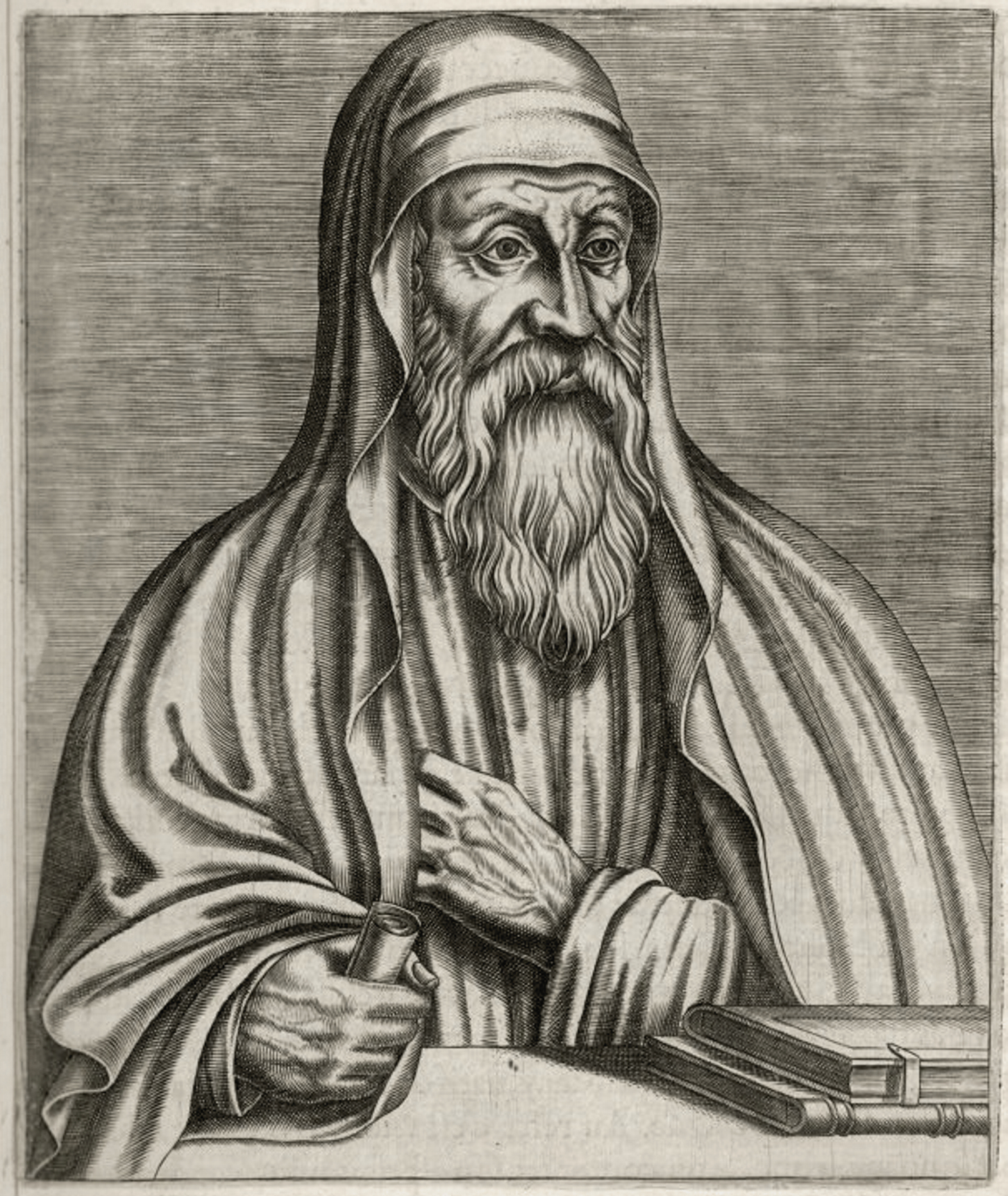
Origin of Alexandria
There is in the written record before 200 AD no suggestion of possible dates for Jesus’ birth. Origen of Alexandria in the 2nd century mocked Roman’s celebrations of birthdays as a thoroughly pagan practice suggesting that Christians for 200 years may have shied away from speculation about a birth anniversary for Jesus seeing it as a violation of their religious sensibilities.

Clement of Alexandria
Around 200 AD, however, in the earliest known writings that mention Jesus’ possible birthday, Clement of Alexandria mentions five dates. Adjusting to our modern calendar, Clement says that different Christian groups selected different dates, those being March 21, April 15, April 20, April 21, and May 20. He made no mention of December 25. (Clement, Stromateis 1.21.145.) Note that only May 20 is close to June, the time when shepherds would have been allowed to graze their sheep in the stubble of agricultural fields.

By the 4th century two dates emerged and they are still celebrated worldwide today. Most Christian churches commemorate the birth of Jesus on December 25. Some groups, typically in the “east,” celebrate on January 6. (A few celebrate on January 7 or 19, depending on the calendars they use and how they calculate the date moving from one calendar to another.)

The most popular theory for December 25, touted by lay persons and scholars alike, is that Christians borrowed the timeframe, if not the date, of the popular pagan Saturnalia festival in late December. Paired with this “borrowing” is the Roman festival of the birth of Sol Invictus, The Unconquered Sun, on December 25. The problem with this theory, though it sounds oh-so convincing, is that no Christian writings from the time support it. It wasn’t until the 18th and 19th centuries that this theory caught on. But if this theory is wrong, why did the early church choose December 25?

Contrary to popular opinion, December 25 was not chosen because it was already a pagan holiday. It was chosen with a theological purpose in mind. Because Jesus’ date of crucifixion was established on March 25, the early church hypothesized that that same date marked the day of his conception by the Holy Spirit. Conceived on March 25 and crucified on March 25, conceived on the date on which he was destined to die, they added exactly 9 months to mark December 25 as his birthday. Most people don’t know that. This is more than a theory. It is attested to by Tertullian, Augustine, and several others.

Augustine of Hippo
 “For he [Jesus] is believed to have been conceived on the 25th of March, upon which day also he suffered; so the womb of the Virgin, in which he was conceived, where no one of mortals was begotten, corresponds to the new grave in which he was buried, wherein was never man laid, neither before him nor since. But he was born, according to tradition, upon December the 25th.” (Augustine, Sermon 202. Around 400 AD)

The “eastern” tradition of Jesus’ birth on January 6 was calculated the same way as December 25, but they began with April 6 as the date of both Jesus’ conception and crucifixion. They used the local Greek calendar month of Artemisios instead of the Hebrew calendar month of Nisan, thus the discrepancy between December 25 and January 6 that exists to this day.

I draw two conclusions from all of this:

1. No one knows Jesus’ birthday; and for the first 200 years of the existence of the church no one cared. June, not December, would have been the month that sheep were allowed into the fields, but even this detail from Luke was given not to pinpoint Jesus’ birthday, but to convey the story as it had been “. . . handed on to us by those who from the beginning were eyewitnesses . . .” (Luke 1:2). For most of the Christian world, that December 25 is not likely the actual birthday of Jesus is unimportant. Any day will do since we can’t know the real date.

2. There is profound meaning in the theological connection of Jesus’ conception and his crucifixion on the same date, March 25, exactly nine months before December 25. The day he was conceived in the womb was joined to the day he was laid in a tomb. The date on which Jesus “bowed his head and gave up his spirit” is paired with the date on which the Spirit of the “most high” overshadowed Mary and conceived Jesus within her. By pairing these two events on the same date, March 25, the early church saw the promise of his salvific death on the cross as present in his conception in the womb. They perceived the destiny of the man even as he was conceived. He was conceived to die for the sins of the world.

For a discussion of the year Jesus was born, see my blog 8 B.C. For a look at the biblical circumstances of his birth—in contrast to Christmas pageants, cantatas, plays, and nativity scenes—see my blog Are Kids' Christmas Plays Biblical? Also see  A Brief Dictionary of Jesus' Birth and Jesus' Birth and Childhood in Chronology.

For more detailed reading, see Andrew McGowan’s article How December 25 Became Christmas. You might also read the article on shepherding from the book “Jesus and His World” by Rousseau and Arav.

Saturday, November 5, 2011

666


Six hundred and sixty-six might be the most famous and misunderstood number ever written. For us to understand its true meaning, we need to explore the practice of gematria.


The letters of the alphabet in the ancient Hebrew and Greek are assigned numerical equivalents. The letters of a person’s name, for example, can be added up to yield a number. On a wall excavated in ancient Pompeii, a city frozen in time by the hot ash of Mt. Vesuvius’ deadly eruption in A.D. 79, a graffiti reads: “I love the girl whose name is phi mu epsilon (a sum of 545 in Greek).”


Jesus’ name has a numerical value in Greek gematria too:

Jesus = IhsouV = 10+8+200+70+400+200 = 888


The Greek letters of Caesar Nero (Neron Kaiser) when transliterated in Hebrew letters adds up to 666.

 666  =  Nun + Resh + Vav + Nun + Kuf + Samekh + Resh
              50        200        6        50      100          60          200

All of the excellent commentaries that I’ve read on Revelation agree. Multiple possibilities for 666 are explored, but they all lean toward the “Nero Caesar” interpretation as the best. But Nero was long dead when John wrote his apocalypse. That’s where Revelation 13:3 comes in.

Revelation 13:3 One of its heads seemed to have received a death-blow, but its mortal wound had been healed. In amazement the whole earth followed the beast.

Nero (pictured) was a persecutor of Jews and Christians. He committed suicide in A.D. 68. The Emperor Domitian (ruled A.D. 81-96), who was given the nickname “The Beast” by Romans, Greeks, Christians and Jews, enforced the emperor worship initiated by Nero.

The emperor cult in Ephesus was set up by Domitian in A.D. 89, and this may be the crucial event that sparked a Christian reaction. How could Christians (who say that Jesus is Lord) go to the Temple of Domitian and worship him as lord? And note this. Many saw Domitian as a reincarnation of Nero, i.e. the beast “whose mortal wound had been healed.” (Revelation 13:12)

Domitian was called “the bald Nero” because of his, well, baldness, and because of the persistent rumor that he was Nero returned. (Domitian is not bald in paintings and statues because he decreed that any artist who portrayed him as bald would be killed.) This false “resurrection” of the mortally wounded Nero-666-beast in the person of Domitian was a lying mockery of the resurrected Jesus who is envisioned by John as “a Lamb standing as if it had been slaughtered.” (Revelation 5:6) If under Domitian’s rule John was arrested and imprisoned, you can imagine that the Ephesian church (and the other six churches as well) had no warm feelings for their falsely resurrected, God-pretending, beastly emperor.

What is the mark of the beast on the hand and forehead all about? Here’s the quote:
Revelation 13:16-17   Also it causes all, both small and great, both rich and poor, both free and slave, to be marked on the right hand or the forehead,  17 so that no one can buy or sell who does not have the mark, that is, the name of the beast or the number of its name. (see also Revelation 14:9-11, 16:2, 19:20, 20:4)

This quote claims that you can’t buy and sell anything without the “mark of the beast” on your hand or your forehead. We can forget all the wild, futuristic speculations about this and just do a little bit of history.

The formula "our Lord and God,” as we learn from the imperial biographies of Suetonius, was introduced by Domitian into the cult of emperor worship as an expression of homage. He mandated that his procurators should introduce the formula, "our Lord and God commands," into all official documents. As a result, it became the custom to address Domitian as Dominus ac Deus noster (our Lord and God). (MOUNCE, Revelation, 140, writes on Rev 4,11, "our Lord and God" was introduced  into the cult of emperor worship by Domitian’. LILJE, Last Book of the Bible, 108-109.)


Here’s the actual Suetonius quote:


“With no less arrogance he began as follows in dictating a circular letter in the name of his procurators, "Our Master (Lord) and our God bids that this be done." And so the custom arose of henceforth addressing him in no other way, even in writing or in conversation.” (Suetonius: De Vita Caesarum—Domitianus, c. 110 A.D., XIII)


The equivalent of Dominus (Master) in Latin is Kyrios (Lord) in Greek.


Most emperors, if not all, were deified beginning with Julius Caesar. But the title “lord and god” is associated only with Domitian. This association is perhaps the main reason that the Book of Revelation is dated to Domitian’s reign. John used that exact phrase to refer not to the Nero/Domitian/Emperor Cult/666 beast, but to God:


Revelation 4:11   "You are worthy, our Lord and God, to receive glory and honor and power, for you created all things, and by your will they existed and were created." (italics mine)

Moreover, Revelation 4:11 is the only place in the entire Bible that the phrases “lord and god” or “our lord and god” occurs.


o` ku,rioj kai. o` qeo.j h`mw/n
the lord and the god of us

This is beyond coincidence and firmly dates the Book of Revelation to Domitian’s reign. It also clarifies John’s concerns.


For obvious reasons John is concerned about the emperor, his idolatrous cult, his idolatrous title, and his idolatrous image in temples and on currency. Domitian’s massive head and arm (pictured from the Selçuk museum) are all that remain of the colossal, 18-meter statue of him that the citizens of Ephesus were required to worshiped. This photo shows what is left of the very “image of the beast” in Revelation 13:15. It stood in a temple here:


Above these arches in the photo (top) on the grassy terrace is where the temple dedicated to the worship of  Domitian once stood in ancient Ephesus, shown in an artist's reconstruction (bottom). Ephesus was a city where the early Christians were under pressure to worship a statue and call it “lord and god.”

Question. Would you as an Ephesian Christian go as was required by law to Domitian’s Temple on the commercial agora and bow to a statue of the emperor saying, “Our lord and our god”?


Question: How would you feel as an Ephesian Christian about the image of Domitian or other emperors on your money (pictured)? How would you feel about the Roman coinage bearing the title Divus Filius (Son of God)? Would you carry and spend money bearing Caesar’s graven image and blasphemous titles? If a coin has Domitian’s image on it, would you save it, spend it, or exchange it for another currency?


Question: If you were a Christian woman in Ephesus, and if you owned a chain of coins to be worn on your forehead, and if those coins had the image of Domitian or other emperors on it, would you wear it? Jesus told a parable about such a woman who lost a coin:

“Or what woman having ten silver coins, if she loses one of them, does not light a lamp, sweep the house, and search carefully until she finds it?  9 When she has found it, she calls together her friends and neighbors, saying, 'Rejoice with me, for I have found the coin that I had lost.’” (Luke 15:8-9)


But it wasn’t just a single lonely coin. Look at the parable. Jesus specifically says it’s one of ten. Why would she be so concerned and so relentless in her search if the coin were not a part of a set of ten, probably meaning ten coins on a chain. Alone a single coin would have been of little value to her, since she had plenty more. But they are considered by her a set. It’s the nine that are of little value to her unless she finds the one of great value that completes the set. The set was likely a dowry or bride price, thus it’s worn in public as the approximation of a wedding ring in our culture. If Domitian put your pastor in jail, and if Domitian persecuted your church, and if Domitian was determined to make you worship him as lord and god, would you wear “the beast” and his blasphemous names on the center of your forehead?


Question: If you were a Jewish Christian man in Ephesus, and if you, in literal obedience to selected texts from Exodus and Deuteronomy (below), wore as required (for women it’s optional) by oral tradition phylacteries or tefillin (photo below)—boxes with the same select verses enclosed—strapped to your forehead and hand when you prayed, then would you put the beast’s image in your hand (a Roman coin), or in the case you are a woman, on your forehead? Here are those texts, one of them the famous “Shama”:


Exodus 13:9   It shall serve for you as a sign (mark) on your hand and as a reminder (mark) on your forehead, so that the teaching of the LORD may be on your lips . . . (italics mine)

Exodus 13:16   It shall serve as a sign (mark) on your hand and as an emblem (mark) on your forehead . . ." (italics mine)

Deuteronomy 6:4-8   Hear (shama), O Israel: The LORD is our God, the LORD alone. 5 You shall love the LORD your God with all your heart, and with all your soul, and with all your might.  6 Keep these words that I am commanding you today in your heart.  7 Recite them to your children and talk about them when you are at home and when you are away, when you lie down and when you rise.  8 Bind them as a sign (mark) on your hand, fix them as an emblem (mark) on your forehead, (italics mine)

Deuteronomy 11:18   You shall put these words of mine in your heart and soul, and you shall bind them as a sign (mark) on your hand, and fix them as an emblem (mark) on your forehead. (italics mine)


How do we know that phylacteries (or tefillin) were worn by Hebrews in the days of Jesus and Paul? Fragments have been found by archaeologists. (pictured – fragments found at Qumran dated to the 1st Century B.C.) Jesus’ words recorded in Scripture also confirm the use of phylacteries in his day.

Matthew 23:5    “[The scribes and Pharisees] do all their deeds to be seen by others; for they make their phylacteries broad and their fringes long.” (italics mine)

Now, do 1st Century phylacteries and coins shed light for you on John’s symbolic marks on the forehead or the hand? I wonder if John is calling on the Christians of western Asia Minor to avoid using Roman currency so that they don’t participate in any practice that might support the 666-beast and his boss, the dragon. Makes sense to me. Many other currencies were available. Is John using coded language to instruct his churches not to replace the scriptures on their forehead and hand with the image and name of the beast on coins—coins that can be worn on the forehead or must be carried in the hand in order to shop and spend? I think so.

I suppose it’s possible that John, writing to 1st Century Christians in Asia Minor, could be prophesying the use of modern supermarket bar codes or electronic surgical biochip implants in your head or hand, as some modern biblical literalists insist. But which sounds crazier to you, that John would be warning his own church members about participating in Roman idolatry or that John would be warning 21st Century Americans about shopping at Wal-Mart?

In Revelation 13, the first beast from the sea then is the imperial power of Rome, the Roman Emperors themselves, specifically Nero “reincarnated” as Domitian. The second beast from the earth (called “the false prophet” in Revelation 16:13, 19:20, and 20:10) then is the Commune Asiae (made up of civic representatives from each city) who managed and enforced Domitian’s emperor cult. (Caird, p. 171) The Commune even used tricks like ventriloquism to make the emperors’ images speak (13:15), thus deluding the superstitious pagan citizenry of Ephesus and other Asian cities wherein Christians strove to resist idolatry and endure persecution. I believe John wants us to see his concern for his seven churches. He wants us to see his beloved church members, friends he knows by name, fellow Christians forced to Domitian’s Temple, compelled to face Domitian’s statue, and pressured to call it “Lord and God.” They are face to face with the beast of idolatry.

A POSTSCRIPT ON “THE ANTICHRIST” – There is no justification for equating Revelation’s 666-beast with the antichrist. Why? There are two simple reasons.

First, the term antichrist does not appear in the Book of Revelation at all. That’s a surprise to most people. Antichrist is a term not to be found in Revelation. I presume that if John had meant for the 666 beast to be called antichrist, he would have said so, but he didn’t.

Second, the term antichrist is explained fully as something else in the Letters of John. There, antichrists (plural and not capitalized) are clearly church dividers. They are Christian pretenders who left the church because they didn’t believe Jesus came in the flesh. The beast of Revelation, however, is clearly a veiled or coded reference to Domitian as Nero “reborn” or his emperor cult or both. See 1 John 2:18, 2:22, 4:3; and 2 John 1:7, which are the only mentions of antichrist in the Bible. And note, it’s antichrists, plural, not the proper name of an individual. If it were the proper name of an individual, the “a” would be an “A”.

We might fairly say that Domitian, who calls himself god and is not, who was believed by some to be Nero raised from the dead but was not, is an opposite of Christ who was raised and who was God, a photographic negative of Christ, or, if you will, an anti-Christ. This is the only sense in which it is fair to relate the antichrists of the Johannine Epistles and the 666-beast of Revelation.

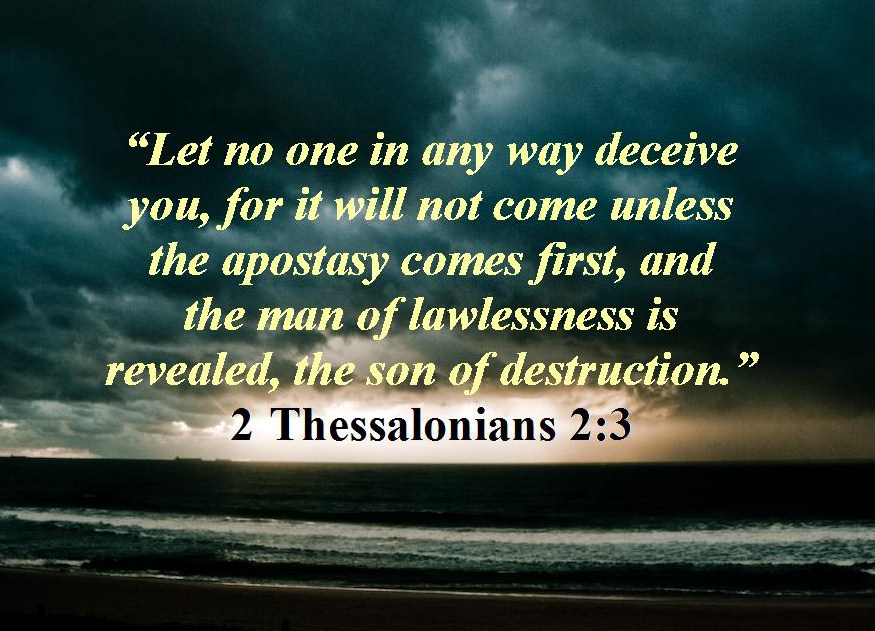
A POSTSCRIPT ON “THE LAWLESS ONE” – A majority of interpreters over the years has also equated the 666-beast with “the lawless one” of 2 Thessalonians 2:3-4:

“Let no one deceive you in any way; for that day will not come unless the rebellion comes first and the lawless one is revealed, the one destined for destruction.  4 He opposes and exalts himself above every so-called god or object of worship, so that he takes his seat in the temple of God, declaring himself to be God.”

The NAB notes are helpful in putting this “lawless one” in a historical context. (What a novel idea!) 2 Thessalonians 2:3-4 offers “a reflection of the language in Daniel 7:23-25; 8:9-12; 9:27; 11:36-37; 12:11 about the attempt of Antiochus IV Epiphanes to set up a statue of Zeus in the Jerusalem temple and possibly of the Roman emperor Caligula to do a similar thing (Mark 13:14). Here the imagery suggests an attempt to install someone in the place of God, claiming that he is a god (Ezekiel 28:2). Usually, it is the Jerusalem temple that is assumed to be meant; on the alternative view . . . . the temple refers to the Christian community.”

Both the Revelation’s 666-beast and 2 Thessalonians’ “lawless one” refer to pagan idolatry and emperor worship. It’s about those who used their power to play god. True, Domitian did that. So have many others. And so will many others. It was a danger to Christians then, and still is today, when a government dictates culture and religion.