My Five-year Eyewitness Retrospective
 The fire chief stopped me in the parking lot of Marvin United Methodist Church in Florence, Mississippi. I was walking from my office to the sanctuary for morning worship. It was Sunday, August 28, 2005, the day before Hurricane Katrina made landfall near the Louisiana / Mississippi State line. The chief walked up to me, shook my hand, and made a simple request. He asked me to prepare my congregation for “a Camille-like event.”
I was not a resident of Mississippi in 1969 for Hurricane Camille, but locals talked of 100-mph winds. Trees down. No power. No water. And fatalities. What could equal Camille? The suggestion was unthinkable.
I gave the chief a hard stare. “Camille-like,” I said.
“Yes, sir,” he said, his voice flat, his eyes already tired. I was looking at a man who knew he was not going to sleep much for a few weeks. I was not sure I believed him, but I agreed to make the announcement.
“What else should I tell them?” I asked him.
I listened to Hurricane Katrina Preparations 101. Anything outside that could become a projectile should be brought inside. Lots of water and non-perishable food items. Lots of batteries for radios and flashlights. Once she hits, stay home. Do not drive. Prepare for weeks without water and electricity.
Projectiles? Weeks?
“Do we need to get the gym ready?” I asked. I knew the church gym had been used as a shelter during previous hurricane evacuations. I knew that the church could organize quickly to make that happen, if needed.
“No,” he said. “Send anyone who stops here up to Richland High School. Don’t let anybody stay here. Your gym roof is not designed to handle 90 mile-per-hour sustained winds.” How he knew that, I do not know. But the prospect of 90 mile-per-hour sustained winds peeling the roof off of the gym left me dumbfounded. That it might happen tomorrow, within twenty-four hours, was inconceivable.
The sun was already radiating off the asphalt as I thanked the chief and shook his hand again. He drove away, and I entered the sanctuary to make the announcement. When I shared with them that the fire chief had just come by the church to ask me to tell them to expect “a Camille-like event,” they gasped and fell silent. My blood ran cold. I did not experience Camille firsthand, but these people did. They knew what those words meant. That is when I realized that something terrifying was out there, and that she might be coming for us, for real.
After worship, while my son and I secured our lawn chairs and such in the garage, my wife and my daughters moved everything in the refrigerator to the deep freezer. Then we filled gallon milk jugs with water and packed the deep freezer to the top. We had already stocked up on batteries and candles. The propane tanks were ready for cooking. We did everything we knew to do. All that was left was to hurry up and wait.
Katrina Arrives
We awoke to wind and rain. It could have been any summer rainstorm, I told myself. I went on the front porch and thought about the coast and New Orleans. Katrina had just made landfall, the TV said. People are fighting for their lives, I thought. God, please help them.
The winds picked up throughout the morning. Looking back, things went in slow motion, but happened so fast. The sky opened and the yard became a lake. A vicious gust scooted a long black snake like a surfer across our flooded front lawn. Limbs cracked and thudded with such frequency that it reminded me of fireworks. More than anything, I was awed by the sustained hiss of the leaves in the trees combined with the sustained howl of the wind. Hours. That is what stunned me. Hours of howl and hiss unrelenting. Add explosions of thunder. And inside the house, add the low drone from the sound of the horizontal deluge driving against the roof. Hour after hour, it made you yearn for just a few seconds of sweet silence.
When the power failed, we huddled in the darkened den, candles were lit in windowless bathrooms, lightning strobed, and we almost yelled at times to hear one another over the roar against the roof and windows.
Then we napped. I am not kidding. I do not understand it even now. We could not keep our eyes open. It must have been Katrina’s low barometric pressure. We all drifted off, like Jesus asleep in the stern of a sinking boat. Then Katrina woke us up.
The large hardwood trees on the far side of the front lawn moved in ways I have never seen trees move. I stepped out onto the front porch with my family at the height of the storm. Because our front porch faced south, and because Katrina’s wrap-around winds were out of the north, the house blocked the storm enough that we could venture out to meet a killer face to face. That moment, for me, is frozen in time. Those treetops resembled blades of grass beneath a weed eater, the way they whipped, trembled and lay down and shattered. Pines snapped at the taproot and fell across the driveway. White siding ripped off the side of the church across the street and flew away. We went back inside.
By the time the sun set, the wind had eased but the rain still poured. We were able to open windows and get some air circulating. We lay awake pondering the fate of people we could not reach by phone, and praying for anyone south and east of us. Hattiesburg. Laurel. Meridian. And God help the people on the coast. The darkness was complete even with my eyes open. We tossed and dozed and wondered.
A New Day Dawns
Sunrise greeted us with new sounds, the combination of which I had never heard before. Chainsaws, sirens, helicopters and planes. I did not know it yet, but those four sounds would be constant for nearly a week. It may not be so in most areas of Los Angeles, but in Florence, Mississippi, guys have chainsaws. And we needed every one of them. There was not a single second during days following Katrina when you could walk outside and not hear chainsaws, sirens, helicopters and planes. It reminded me, though by stark contrast, of the week following the events of September 11, 2001, when the skies were eerily empty and silent.
The gym roof survived, but no street in our town was passable the day after Katrina. Yes, 150 miles from the coast, lucky because we were on the “weak” western side of the storm, and still there was not a passable street in Florence. Trees, utility poles and downed power lines blocked every road. No power. No water. No way out. And thankfully, we found out later, no fatalities in our community. 
We were fortunate. Our house, being downtown, got water and power back in four days. It seemed a long time. But friends did not have water and power for over two sweaty, stressful weeks. My best friend was one of those. He and his wife rode out the storm and its long aftermath with a newborn. You did what you had to do.

Why Did It Happen?
A few weeks after Katrina, my first book came out. I went to the Florence, Mississippi, Post Office to mail a copy to a friend. I got a mailer and waited in line. A man came in behind me and took notice of the title of my book, Jesus Unplugged. He commented to me about it and introduced himself as a pastor. He was a 140-pound, elderly African American.
“The Lord sent Katrina to New Orleans as a punishment,” he said, “for the sins going on in that sinful place.”
“I don’t believe that,” I said, aware that people were starting to listen.
“No doubt about it,” he said, not seeming to realize that I had just disagreed with him. “The Lord got those sinners.” I turned to face him.
“You don’t really believe Jesus sent Katrina to punish New Orleans, do you?” I asked.
“Yes, sir, I do! Don’t you?”

Because he had no reply, some in the line laughed nervously. I felt bad. I did not want a public theological debate, and I did not mean to embarrass the man or myself, though I may have succeeded in accomplishing both. But it bothers me when people say things like that. That theology (bad things happen to people because of the bad things they did) is not Christian. My fellow pastor in the post office was describing how karma works, not the kingdom of God.
What Did Jesus Say?
  
Putting aside some unsightly “Christian” interpretations of Katrina as God’s punishment for sin, I want to affirm the compassion and generosity of Christians following the storm. For that matter, the whole world chipped in on the recovery. Our disaster was that huge. It is encouraging to know that in the face of tragedy, people really do come together and try to help. A lot of people worked very hard, not just in the days following the storm, but month after month, year after year, really, to help the coast recover. The recovery goes on even now, five years later.
“I never thought I’d see anything worse than… Oh, what was the name of that awful 1969 storm?” he asked.
“Camille,” someone reminded him.

Though I was an eleven-year-old boy some 500 miles away in Georgia when Camille hit Mississippi in 1969, just five years ago I personally witnessed a measure of Hurricane Katrina’s power. But in these last five years, I also personally witnessed Katrina’s continuing power—the power to do the impossible for anyone who survived the viciousness of “that awful 1969 storm.” Katrina was making Mississippians forget the name “Camille.”
 NOTE: August 29, 2010 is the fifth anniversary of Hurricane Katrina’s landfall on the U.S. Gulf Coast. Nearly 2,000 people lost their lives. Nearly 100 were listed as John or Jane Doe. Katrina was the fifth deadliest Atlantic storm. At her peak, she was the sixth most powerful Atlantic hurricane. And Katrina was the most costly natural disaster in U.S. history. NOTE: August 29, 2010 is the fifth anniversary of Hurricane Katrina’s landfall on the U.S. Gulf Coast. Nearly 2,000 people lost their lives. Nearly 100 were listed as John or Jane Doe. Katrina was the fifth deadliest Atlantic storm. At her peak, she was the sixth most powerful Atlantic hurricane. And Katrina was the most costly natural disaster in U.S. history.For more evangelical bad behavior: Hell House The Prosperity Gospel: God In a Box The Christian Ambush: A True Story Don't You Hate Christian Tracts? |
Showing posts with label God. Show all posts
Showing posts with label God. Show all posts
Friday, June 4, 2010
Katrina - The Wrath of God?


Saturday, September 19, 2009
The Only Functional Family
 Admit it. You have to have it. You look for it everyday in the face of your spouse or in the face of a stranger. It’s something that’s nearly impossible to find, it’s something you cannot keep, and yet your radar is on high alert for it all day long.
You need relational union, and you’re lying to yourself if you think you don’t. Blissful, intimate union. It’s what you have to have.
But here’s the crazy part. I’m fifty years old, and I’ve rarely had it, yet I still look for it every day. No matter your age, you’ve rarely had it. Yet you’re craving it right now like it is right around the corner. You desperately need “this thing” that you’ve rarely experienced, if ever. And even if you’ve experienced it, you know that it doesn’t last. So here’s my simple question:
Why is it that you forever hunger for a relational union and bliss that you have rarely experienced and that never lasts?
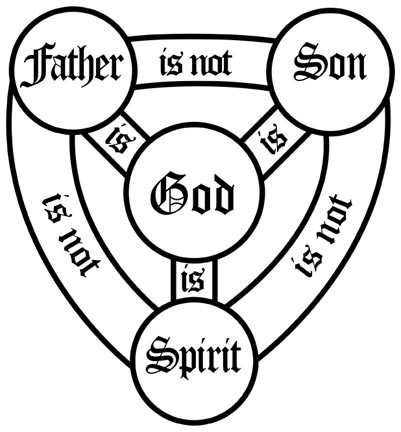
There are biological, chemical, anthropological, sociological, and psychological answers to this question. Let me try a theological answer—by that I mean, an answer that begins with God, in whose image we are said to have been created. In the Bible, God is three persons in utter union. Maybe that’s not a coincidence.
If it is true that God is three in union, three persons yet one substance, then our being created in God's image has a profound implication for our question about relational union and why we need it.
If three-in-union is God's image, and if we are created in this image, then perhaps we are wired at the factory (as a friend of mine once put it) for union in relationship. Is this possible? If so, then it raises powerful questions.
Could that be why our broken relationships almost drive us to despair, because they violate the relational union in whose image we were created? Could that be why our relationships hurt us so badly, because we are wired for union, desire union, and seek union, all because we are created in the image of the Tri-union of the Tri-unity?
If three-in-union is God's image, and if we are created in this image, then perhaps we are wired at the factory (as a friend of mine once put it) for union in relationship. Is this possible? If so, then it raises powerful questions.
Could that be why our broken relationships almost drive us to despair, because they violate the relational union in whose image we were created? Could that be why our relationships hurt us so badly, because we are wired for union, desire union, and seek union, all because we are created in the image of the Tri-union of the Tri-unity?
When it comes to my broken relationships (and human relationships are always broken), I get tantalizingly brief glimpses of the union that exists between Father, Son, and Spirit. "They" know they are distinct persons with no blurred lines and no unhealthy enmeshments—what some psychologists call codependences. But humans are prone to codependent, invasive, relational enmeshment, and that’s not healthy union.
It’s infuriating that I cannot catch and keep this experience of healthy union, no matter how much I desire it and no matter how hard I try to sustain it. It always slips through my fingers. I lose my healthy sense of self by letting myself be used or abused by others, including those who really love me. But, of course, I end up using and abusing them too, though I don’t want to. No matter how much I wish it to be otherwise, the healthy union that I MUST HAVE cannot be self-created or self-sustained. It is delusional for me to think otherwise.
The union we see in the Trinity, however, is both healthy and sustained. Throughout the NT Jesus is crystal clear who he is, a very strong sense of self, clear that he is not the Father or the Spirit, but also clear that the Three are One. The Three Musketeers is a “literary type” of this ideal tri-union. “All for one and one for all.” I might add, “All the time.”

I realize that the word Trinity is an oxymoron. It’s an utter contradiction, at least by human reckoning. Tri- means three and –nity (unity) means one. How can three be one? How can one equal three? This is the mystery of God’s very image in the Bible. God is the great Three who are One. Tri-unity. How can we even begin to make sense of this? Perhaps there is a way.
Marital intimacy is a reflection of the union in the Tri-unity, though we manage to screw it up, of course. It's a sin thing. It's our human dis-ease that we lose our sense of self, that we try to recover it in needy manipulation, and that we use one another for selfish purposes. Yet, every once in a blessed while, the union we are wired for is blissfully experienced and enjoyed. We get a glimpse now and again when “the two become one.” The perfect union that I (and undoubtedly you) yearn for cannot be sustained, however, even in the healthiest of marriages, as you are probably painfully aware.
Marital intimacy is a reflection of the union in the Tri-unity, though we manage to screw it up, of course. It's a sin thing. It's our human dis-ease that we lose our sense of self, that we try to recover it in needy manipulation, and that we use one another for selfish purposes. Yet, every once in a blessed while, the union we are wired for is blissfully experienced and enjoyed. We get a glimpse now and again when “the two become one.” The perfect union that I (and undoubtedly you) yearn for cannot be sustained, however, even in the healthiest of marriages, as you are probably painfully aware.
How do I describe this perfect union? It fully protects and affirms my unique selfhood while connecting me with other selves in mutual joy, love, and respect that affirm their unique selfhoods. No blurred lines. Healthy boundaries. Embracing and being embraced without invasion. Loving others fully as much as you love yourself. Willing to lay your life down for a friend.
Have I been able to do this or experience this in my lifetime? Yes and no. I live in hope that I'm getting better at loving and respecting and serving others, and live in hope that the union that Jesus says is mine really is mine, even though I don't always feel it and I often mess it up. I choose to believe that my promised union with Christ on resurrection day will fulfill my lifelong yearning for union with him and with humanity, and that this same promise can help me grow in this love in the here and now.
Are all families dysfunctional? All but one, as I see it. The only functional "family" is the Father, Son, and Spirit, and this union is ours by the biblical new covenant promise. In Jesus' flesh we are adopted into this functional family. Faith is required, however, to trust that this union is yours when your wrecked relationships are telling you otherwise. The spirit is willing, but the flesh is weak.
The Bible, however, is not nearly as negative about flesh as is often portrayed. Is it weak and flawed? Yes. But all things were made in, by, for, and through Jesus, the incarnate Word of God. This means that Jesus created flesh, if you believe the Bible. And John's Gospel makes a point of saying that the one who created flesh became flesh.
The biblical Greek word is sarx. Flesh. God became sarx, flesh, like you and me, feeling everything we feel, experiencing fully the same weaknesses and temptations we feel. How could Jesus save all flesh (which he made) unless he became fully flesh? This was God's plan from the foundation of the world.
A husband and wife becoming "one flesh" is not a bad thing, is it? It's a union blessed by the Tri-union God. And Jesus came to save all flesh. And all flesh shall see it together. Jesus was born in the flesh, embracing our flesh, and taking all flesh to the right hand of his Father through his death, resurrection (of his flesh!), and ascension. If these biblical claims are true, then what is the result?
Have I been able to do this or experience this in my lifetime? Yes and no. I live in hope that I'm getting better at loving and respecting and serving others, and live in hope that the union that Jesus says is mine really is mine, even though I don't always feel it and I often mess it up. I choose to believe that my promised union with Christ on resurrection day will fulfill my lifelong yearning for union with him and with humanity, and that this same promise can help me grow in this love in the here and now.
Are all families dysfunctional? All but one, as I see it. The only functional "family" is the Father, Son, and Spirit, and this union is ours by the biblical new covenant promise. In Jesus' flesh we are adopted into this functional family. Faith is required, however, to trust that this union is yours when your wrecked relationships are telling you otherwise. The spirit is willing, but the flesh is weak.
The Bible, however, is not nearly as negative about flesh as is often portrayed. Is it weak and flawed? Yes. But all things were made in, by, for, and through Jesus, the incarnate Word of God. This means that Jesus created flesh, if you believe the Bible. And John's Gospel makes a point of saying that the one who created flesh became flesh.
The biblical Greek word is sarx. Flesh. God became sarx, flesh, like you and me, feeling everything we feel, experiencing fully the same weaknesses and temptations we feel. How could Jesus save all flesh (which he made) unless he became fully flesh? This was God's plan from the foundation of the world.
A husband and wife becoming "one flesh" is not a bad thing, is it? It's a union blessed by the Tri-union God. And Jesus came to save all flesh. And all flesh shall see it together. Jesus was born in the flesh, embracing our flesh, and taking all flesh to the right hand of his Father through his death, resurrection (of his flesh!), and ascension. If these biblical claims are true, then what is the result?
Jesus is forever human: Resurrected flesh and bones.
Luke 24:39 Look at my hands and my feet; see that it is I myself. Touch me and see; for a ghost does not have flesh and bones as you see that I have."
He said the bread that he gives to the world is his flesh. Is his flesh evil? No, it's a sacrament! It's sacred! In Romans 8 Paul wrote:
Romans 8:3 For God has done what the law, weakened by the flesh, could not do: by sending his own Son in the likeness of sinful flesh, and to deal with sin, he condemned sin in the flesh,
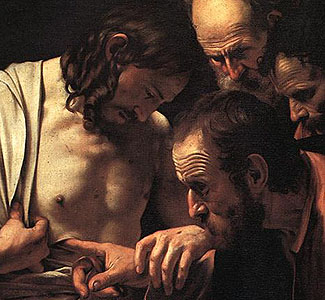 Jesus didn't condemn flesh. He became flesh to deal with sin and death in the flesh.
Hebrews 2:1-15; 17-18 Since, therefore, the children share flesh and blood, he himself likewise shared the same things, so that through death he might destroy the one who has the power of death, that is, the devil, 15 and free those who all their lives were held in slavery by the fear of death. 17 Therefore he had to become like his brothers and sisters in every respect, so that he might be a merciful and faithful high priest in the service of God, to make a sacrifice of atonement for the sins of the people. 18 Because he himself was tested by what he suffered, he is able to help those who are being tested.
What this means is that the God of the universe chose to unify us with him in the flesh. Rather than blending us together like a drop of water blends into the ocean, God chose a union in the flesh that defends unique, personal identity forever.
Is the image of God in which we are created a relational Tri-union of distinct persons? Is that why we're wired for relationship and yearn for union with someone, with something, with Father-Son-Spirit? Is God’s coming to us in human flesh our adoption into the only functional family? I have come to believe that the answer to each if these questions is yes.
If I am correct, then why do adherents of the world's monotheistic religions, including Christianity, prefer a solitary god, a monad, a remote singularity? And how can a deity who knows no relationships have made us, or even want to make us? For what purpose? How can a mono-god whose image is non-relational create humans wired for relationship? Why would a self-contained uni-god create relationships, much less desire union with lowly, needy creatures like us?
If I am correct, then why do adherents of the world's monotheistic religions, including Christianity, prefer a solitary god, a monad, a remote singularity? And how can a deity who knows no relationships have made us, or even want to make us? For what purpose? How can a mono-god whose image is non-relational create humans wired for relationship? Why would a self-contained uni-god create relationships, much less desire union with lowly, needy creatures like us?
Thursday, September 3, 2009
What Color is a Green Apple?

a parable of perception
Things aren’t always as they seem.
Take your favorite coffee cup and put it on the table in front of you. Now look at it. Let’s say for the sake of the argument that you have “normal,” non-corrected, 20/20, human eyesight. Your eyes are giving you information about the cup. Your image of it is sharp and clear. You assume that what you are seeing is the cup. But is it?

When you examine the problem this way, you begin to see that all of these images belong to the cup, but none of the images are the cup. The cup is a reality that is more than merely what your eyes can see. Your eyes only see a narrow band of the full spectrum of light. For example, your eyes can see no light from the ultraviolet or the infrared spectrums. Your eyes “see” the cup, for sure, but only in the spectrum of light that your eyes are designed with which to see.

When an apple appears green to you, it is not because the apple is actually green. The surface of the apple happens to absorb blue and red wavelengths of light while it reflects green. The apple then appears to your eyes to be green. But if you were significantly colorblind, you probably would not be able to tell a red from a green apple!

When your eye sees the green apple, the really weird thing is that a green apple is actually absorbing every other color but green. Green is the only light wave that it rejects! Your eye sees the apple as green because green is the only light color it can’t keep (absorb).
To state this even more accurately and boldly, when you look at your cup, you’re not really seeing your cup at all. Your eyes are “reading” the light reflected off of the cup’s surface. If you put your cup in total darkness, the cup is still there even though you can’t see it. Does the cup exist in the dark? Yes, obviously. So your cup is more than its mere appearance. Cup-ness is a reality in and of itself apart from your visual perception of the light bouncing off of it. The fact that a blind person can drink from your cup should have told you that! The cup is more than meets the eye.
 We are “seeing things” because of light. Eyes are organs that process light. Light enters the eye, shining on what are called cones and rods, and the light triggers a chemical reaction in the rods and cones, and the chemicals turn into electrical impulses that are sent to a certain part of the brain where these impulses are received, organized, and transmitted to other parts of the brain for analysis and communication.
So when you look at your cup, are you seeing your cup? Yes and no. “Yes” because the image your eyes provide is an actual image of your cup. “No” because the image is not your actual physical cup. Like a camera, your eye catches light and provides a “photograph” of that light bouncing off of stuff like your cup. Light bounces off of the cup and goes into your eyes, and you “see the light” bouncing off the cup. You do not see the cup itself. For everyday purposes everyone seems to assume that the cup they “see” is the actual cup. In a very real sense it’s not.
Why?
Because light is the only thing eyes can see. Eyes receive and process light, not cups. Your eyes are light processors, not cup processors. The “photograph” of the cup is not the cup.
Let’s make things worse! Think about light. If light bounces off of things (like your cup) and then goes into your eyes, then light has speed, right? What is that speed? Light travels at 186,282 miles per second (or about 670 million mph). It travels fast enough to circle the earth more than seven times a second. To put that speed in perspective, light coming all the way from the moon’s surface only takes 1.28 seconds to reach the Earth. That’s really fast. The moon is 238,857 miles away. A quarter-million miles in a-second-and-a-half. The implication of this is just wild.
The moon, however, doesn’t give off its own light. It merely reflects the light of the sun. So how long does it take sunlight to travel from the sun all the way to the Earth and its moon? Eight minutes. We’re talking about 93 million miles at 186,282 miles per second in about 500 seconds (or a little over eight minutes). So when you look at the sun—hopefully you don’t stare at it!—you aren’t seeing the sun as it is, but as it was eight minutes ago. You’re looking eight minutes back in time.
When you look at the planet Saturn with your naked eye—easily done if you know where and what to look for—you aren’t seeing Saturn as it is, but as it was . . . one whole hour ago.

On a clear, cold, moonless night, drive out away from the lights of “civilization” and look up using only your naked eye. The sky is a virtual canopy of stars—thousands of them. Some of the dim stars you are looking at are 2000 light years from Earth. But you are not seeing those distant stars as they are today. You are seeing them as they were 2000 years ago when Jesus of Nazareth walked the Earth. Moreover, when Jesus gazed at these distant stars, he saw them as they were 2000 years before his time, or near the time when Abraham walked the Earth.
Now there are 200 to 400 billion such stars in our Milky Way Galaxy. But, as the Hubble Space Telescope has so dramatically shown us, there are at least 100 billion galaxies out there too, each with on average 200 to 300 billion stars of their own. That brings an even more bizarre fact.

Again, things aren’t always as they seem. We can’t see anything in the heavens as it “is” right now. To stand in your backyard and look up at the stars is to leave “the now.” To stargaze is to travel backward in time. But this raises yet another oddity.

When you look at your cup, you are seeing an image of it as it was a fraction of a second ago. In fact, because the speed of light is finite, there is no image that you can ever perceive visually in the actual present. Everything you perceive with your eyes is in the past due to a finite speed of light. How far in the past the object is seen depends on its distance from your eye.
Because light has a speed, you see the cup in front of you as it was fractions of a second ago. You see the moon as it was one second ago. You see the sun as it was eight minutes ago. You see Saturn as it was an hour ago. You see Proxima Centauri as it was four years ago. You see distant stars in the night sky as they were 2000 years ago.
My point? This blog is a parable of perception. When it comes to seeing, perception is not reality. But what about God? Is perception reality when it comes to God?

We tend to see the Son and the Father as different, do we not? The Father is seen as distant and judging while Jesus is seen as accessible and forgiving, even though the Jesus of the Bible insists that “when you’ve seen me, you’ve seen the Father.” (For more on this, see The Un-Religion.)

This creates a rather bizarre dilemma, doesn’t it? If you are a follower of Jesus or want to be, and if you take what he says in the Scriptures seriously, then you can trust your own perception of God, or you can trust what Jesus is telling you when it comes to seeing his Father. Is Jesus’ image of his Father direct, clear, and correct, or is yours?
Faith is the willingness to trust his eyes instead of your own. Faith rests in what Jesus sees rather than what you think you see.
If you are interested in other of my parables or parable-like analogies, check out these: Pews Stink (A Black and White Satire), The Kingdom of Heaven is Like Gravity, A Guitar Hero Parable (Or The Gospel According to Slash), and A Country Fried Parable (Or A Lynyrd Skynyrd Parable of the Kingdom of Heaven).
For Jesus' parables see The Absurd Parable of the Unforgiving Slave, The God Who Gambles, Parable of the Vine and Branches, The Crooked Manager, The Friend at Midnight, Heaven Is Like a Crazy Farmer, He Speaks Of . . ., Salted With Fire, Talking Sheep and Goats, Is Your Eye Evil?, Two Prodigals and Their Strange Father, The Lazarus Parable Is Not About the Afterlife,and Jesus Used Parables Like a Sieve.
If you are interested in other of my parables or parable-like analogies, check out these: Pews Stink (A Black and White Satire), The Kingdom of Heaven is Like Gravity, A Guitar Hero Parable (Or The Gospel According to Slash), and A Country Fried Parable (Or A Lynyrd Skynyrd Parable of the Kingdom of Heaven).
For Jesus' parables see The Absurd Parable of the Unforgiving Slave, The God Who Gambles, Parable of the Vine and Branches, The Crooked Manager, The Friend at Midnight, Heaven Is Like a Crazy Farmer, He Speaks Of . . ., Salted With Fire, Talking Sheep and Goats, Is Your Eye Evil?, Two Prodigals and Their Strange Father, The Lazarus Parable Is Not About the Afterlife,and Jesus Used Parables Like a Sieve.
Subscribe to:
Posts (Atom)