Showing posts with label Einstein. Show all posts

Thursday, September 24, 2009

Where is my grandmother (1908-2007)?


Photo of “Minkie,” late 1990s, with clockwise from left: me, bro Mike, sis Susan, bro Bill


I no longer have any living grandparents. Homer Gary died of pneumonia in 1936 so, sadly, I never knew him. Gussie Gary died at the age of 96 in 1992. Bob Segers died of a heart attack at the age of 82 in 1986. And Susan Segers died in her sleep shy of her 100th birthday on November 1, 2007.

As firstborn grandkids often do, I nicknamed my grandmother. I was a toddler. I’d been to the doctor, and he had a picture of Mickey Mouse on the exam room door. I got Mickey Mouse and Grandma mixed up in my little brain, and I called her Minkie Ma. The name Minkie stuck. (Or should I say Susan Segers got stuck with the name Minkie?)

Everyone reading this has likely lost a loved one. And we Christians have attended funerals where bold assertions are made about where our deceased loved ones are right now. That’s what I want to write about here. And I want to make it personal. I want to ask the question, Where is Minkie right now?

Because we’re all stuck here in the flow of time, there seems to be a time gap in our Christian belief in resurrection on the last day, doesn’t there? It is a gap between our deaths and our future resurrections. This time gap has bothered Christians for centuries, and many explanations have been invented to account for it.

Keeping it personal, Minkie passed away in 2007. Her resurrection will occur on the last day, according to Scripture. But what about the meantime? What about now? If my grandmother is dead and buried, where is she until* the resurrection of the dead on the last day promised by Jesus?

1. Is her soul dead, too, until* resurrection day?


2. Is her soul asleep until* resurrection day?

3. Did her soul leave her body and go to an “intermediate heaven" until* resurrection day? (see my other blogs: Paul didn’t go to heaven; The psychic medium of Endor was a fake; and The soul doesn’t leave the body at death)

4. Did her soul get an “intermediate body” (a loaner body?) to wear until* her buried body can be resurrected and her soul reunited with it? (The loaner body must be disposable.)

5. Did her soul go to Purgatory to wait and to be purified until* resurrection day?

6. Did her soul go to Limbo to remain a wanderer or be punished until* resurrection day?

*UNTIL - a temporal term you have to use if you think of time in Newtonian terms.

None of these six imaginative inventions are in Christian scripture. I want to take a fresh look at the question of where the dead are right now. I want to propose that we look at time differently—a way that makes none of these biblically foreign inventions (1-6 above) necessary. And, strangely enough, Albert Einstein helps us see a biblical answer to our question.

Is there a tiny span of time when it seems to me experientially that Minkie is in the ground and nowhere else until the resurrection day promised by the Bible? Yes. But the important word is "seems" from an eternal, biblical perspective and from Einstein’s perspective, which “coincidentally” agrees. 

I admit, here in the seeming flow of time, Minkie is seemingly no where else but in the ground, body and soul. That is, of course, not a very comforting prospect for me, as one who loved her. But I don’t believe that it’s true. Albert Einstein’s mind-blowing explanation of time, believe it or not, which most people have never heard or understood, illustrates a biblical view of time.

From Einstein’s paradoxical perspective, Minkie is a toddler learning to walk right now, she’s giving birth to my mother right now, she’s being nicknamed by me right now, she’s burying Papa right now, she’s dying in the nursing home right now, and she’s risen with the Lord at the future general resurrection promised by Scripture right now.

Each of these Minkies, every Minkie-moment, if you will, is literally in the spacetime loaf of our universe, all past moments, the present moment, and all future moments. All there. All happening. All real. In God’s universe, the one Einstein tried to explain to us Newtonian terrestrials, everything is happening.

Moses and Elijah, for example, visiting Jesus at the transfiguration are not ghosts, Scripture insists, but are men who are glorified. That means that they are resurrected human beings. But if the resurrection of the dead is a future event, how could Moses and Elijah already be raised? It’s because the resurrection slice is in the universe-loaf from the beginning. These glorified men not only visited from somewhere else. They visited from some-when else.

You can’t think chronologically to see this. You have to try to see the whole. Resurrection seemed like a "not yet" moment at the time to Peter, James, and John on that mountain with the glorified (resurrected) Moses and Elijah and Jesus standing before them. But the “not yet resurrection” revealed its truth to them by breaking into their present from the future.

Resurrection day seems like a “not yet” moment to us now too, an event disconnected from us in a distant, unknowable future. But from God’s universal eternity, and in Einstein’s universe that IS, a universe that IS happening, a universe that IS whole and complete, the future resurrection has happened, is happening, and will happen. It was and is and is to come, now and forever.

I’m going to give an analogy that helps me, but first, here is a key insight from what Einstein has taught us. Our universe does not just contain every where. It also contains every when, including (if you believe Scripture) the future resurrection day. Space (all wheres) and time (all whens) are inseparable. If all wheres exist, then all whens must exist, because space and time are one thing designated by one word: spacetime. Our universe is spacetime. Everywhere and everywhen compose our physical universe.

In spacetime, however, we creatures are only wired to experience one "now" at a time in the seeming flow of chronological time. But time doesn't really flow. Your past is really still here in our universe, not just a memory. Your future is here in our universe, though you haven't experienced it yet. Our universe includes all space and all time.

Here’s an illustration that helps me visualize this. Picture a movie theater strip on a platter (a horizontal reel—pictured), let’s say the movie Titanic. Here are Jack and Rose in a single frame from the movie.

We experience a movie one frame at a time as it passes in front of a projector lamp. But that doesn't mean that every frame we've already seen isn't still sitting up in the projection booth on a platter (pictured). Nor does it mean that every frame we're about to see isn't sitting up there in the projection booth on another platter. The movie, every frame, is whole and complete up there, but we can only experience it now-frame by now-frame. 

We experience time like this because of our human, creaturely, design limitations. But the risen Jesus has no such limitations in the Bible. Neither does anyone resurrected. As the Apostle Paul insists, we will be like him in resurrection, and the risen Jesus is not bound by space and time.

Do you see the problem? Just because we perceive the universe one “highlighted now” at a time, argue physicists, does not mean that the universe exists in this way.

It flies in the face of our experience, but the physical universe appears to be one big present mega-moment. What we call past, present, and future all resound equally together across the vastness of all space and time. The Loaf shows no partiality to any one moment. It is we who do that. All nows are equal in the eyes of the universe. It is not so for us. That seems to be because we are designed to experience one note at a time. With one note at a time, we can we hear the melody. Without it, all the notes blare at us in unison dissonance.
 
So the universe is complete. Everything is happening in here. We live in a vast “eternal now.” And there are many "you moments" in our universe, all of them you, and all of them real, from your birth to your death to your resurrection.

Have you ever wondered, How can the risen Lamb of God be slain from the foundation of the world if the crucifixion and resurrection didn't happen until around 30 AD? It sounds contradictory. This biblical claim flies in the face of a conventional view of chronological time.

If the universe contains every when, however, then what we believe is the key event in the history of the universe---the crucifixion and resurrection of Jesus---is the key "now" among all nows that exist from eternity---from Alpha to Omega. A man born around 8 B.C. and executed around 30 A.D. is slain from the foundation of the world? Scripture says yes.

The reason that Jesus can be "slain from the foundation of the world" is because the whole of the universe (past, present, and future) came into existence whole. When the universe came into existence, it wasn’t just all wheres that came into existence. All whens came into existence too, including the crucifixion. The crucifixion of Jesus, the pivotal moment in our universe as we Christians see it, was and is and always will be present to the whole. It’s the linchpin moment in a forever-complete salvation-history.

From this perspective, the crucifixion-now can be seen as "simultaneous" with the creation-now and with the last-day-resurrection-now. They're all here together in the spacetime loaf, the complete physical universe, all whens from beginning to end are just here.

Consider this the key point: I see no problem with what Jesus means when he speaks from the cross, "Truly I tell you, today you will be with me in Paradise. ”Luke 23:43) The Lord is present to every day in the universe. They are all his simultaneous todays. And when we experience our death-nows as he did, we "skip" or "fast-forward" instantaneously to our joint resurrection-now with him. Therefore, the today of our deaths is literally the today of our resurrections. ( That's because from a heavenly perspective as well as an Einsteinian perspective, both days (like all days) are eternally simultaneous.

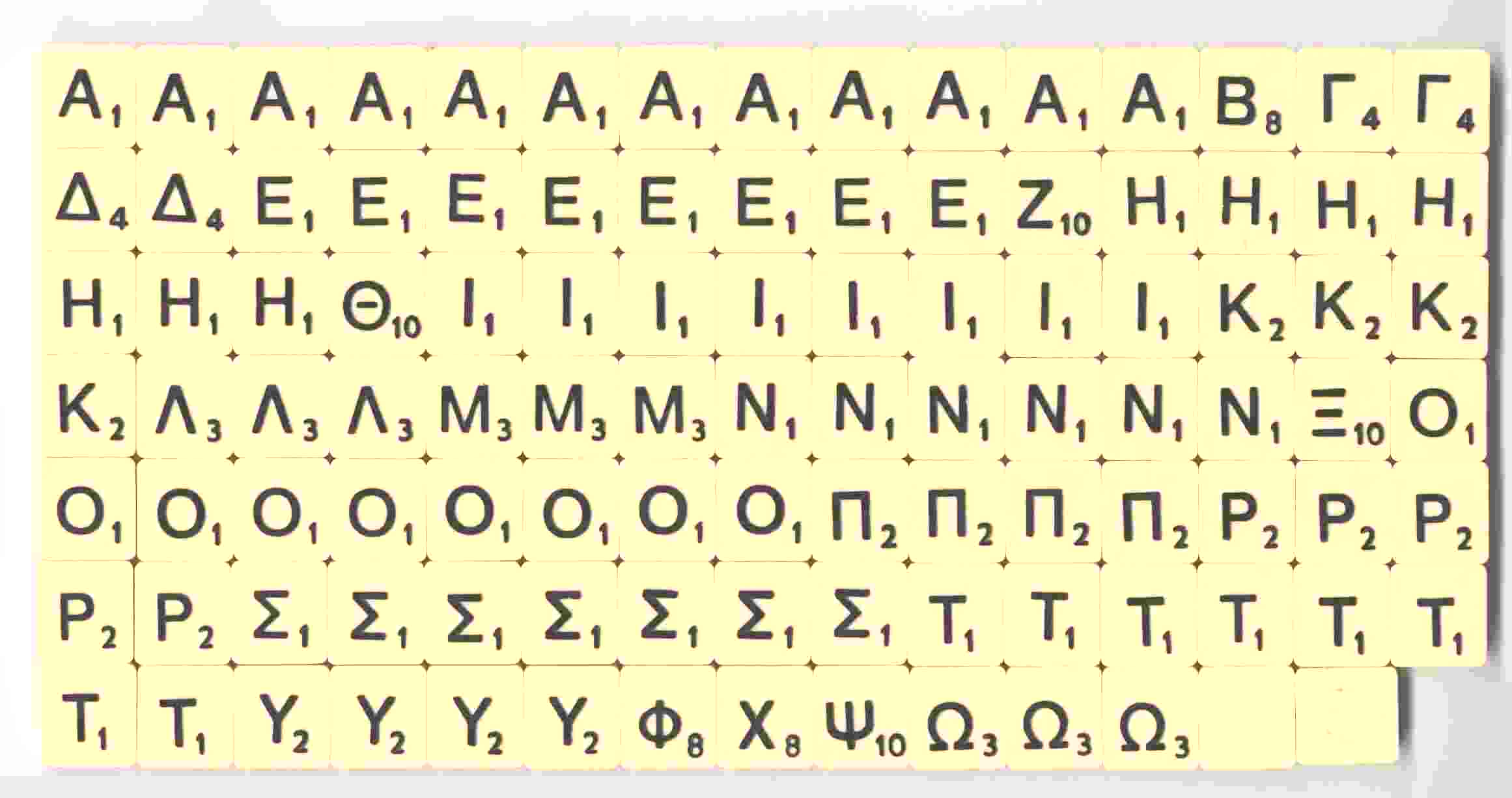
So when resurrection-Jesus popped in on the disciples behind locked doors, he wasn't just appearing from some-where else. He was also appearing from some-when else: the future resurrection of the dead. He transcended space and time to appear to his friends. He transcends spacetime still. He reigns over all spacetime in his kingdom of heaven. He is the resurrection. He is the Alpha (A) and the Omega (W....).

All this is to say that Minkie, the finest Scrabble player who ever lived, is both in the ground and alive forevermore at the future resurrection of the dead. She is dead yet alive. The kicker is, if the Bible and Einstein are correct about creation, then in our universe right now I am at the future resurrection of the dead with Minkie too, and so are you.


Thursday, September 3, 2009

What Color is a Green Apple?


a parable of perception

Things aren’t always as they seem.

Take your favorite coffee cup and put it on the table in front of you. Now look at it. Let’s say for the sake of the argument that you have “normal,” non-corrected, 20/20, human eyesight. Your eyes are giving you information about the cup. Your image of it is sharp and clear. You assume that what you are seeing is the cup. But is it?

An enormous number of living creatures on earth have eyes. Elephants, eagles, dogs, hammerhead sharks, and houseflies all have eyes. But are their eyes identical? When other creatures look at your cup, do they see exactly what you see? Do they see shapes and colors the same way your eyes do? If not, then which image of your cup—the elephant’s, eagle’s, dog’s, shark’s, housefly’s, or yours—is “correct”? Which one is really the cup?

When you examine the problem this way, you begin to see that all of these images belong to the cup, but none of the images are the cup. The cup is a reality that is more than merely what your eyes can see. Your eyes only see a narrow band of the full spectrum of light. For example, your eyes can see no light from the ultraviolet or the infrared spectrums. Your eyes “see” the cup, for sure, but only in the spectrum of light that your eyes are designed with which to see.

What you see, your visual image of the cup, is limited by your eyes’ design. In fact, your eyes are sieves that filter out the chaotic light frequencies that interfere with your survival—so you can hunt a deer, spot a crouching lion, and avoid walking off a cliff. Therefore your image of the cup is incomplete. The cup’s cup-ness is more than what your eyes in their limitations can perceive.

When an apple appears green to you, it is not because the apple is actually green. The surface of the apple happens to absorb blue and red wavelengths of light while it reflects green. The apple then appears to your eyes to be green. But if you were significantly colorblind, you probably would not be able to tell a red from a green apple!

One in every 100 males has some “red-weakness” (Protanomaly), meaning shades of red are difficult to distinguish. Five in every 100 males has a “green-weakness” (Deuteranomaly). (Colorblindness in women is very rare. Tritanope is even rarer.) A colorblind person who looks at a colorful map of the world will see “the world” differently than you. The following four maps of the world demonstrate this.

When your eye sees the green apple, the really weird thing is that a green apple is actually absorbing every other color but green. Green is the only light wave that it rejects! Your eye sees the apple as green because green is the only light color it can’t keep (absorb).

To state this even more accurately and boldly, when you look at your cup, you’re not really seeing your cup at all. Your eyes are “reading” the light reflected off of the cup’s surface. If you put your cup in total darkness, the cup is still there even though you can’t see it. Does the cup exist in the dark? Yes, obviously. So your cup is more than its mere appearance. Cup-ness is a reality in and of itself apart from your visual perception of the light bouncing off of it. The fact that a blind person can drink from your cup should have told you that! The cup is more than meets the eye.

We are “seeing things” because of light. Eyes are organs that process light. Light enters the eye, shining on what are called cones and rods, and the light triggers a chemical reaction in the rods and cones, and the chemicals turn into electrical impulses that are sent to a certain part of the brain where these impulses are received, organized, and transmitted to other parts of the brain for analysis and communication.

So when you look at your cup, are you seeing your cup? Yes and no. “Yes” because the image your eyes provide is an actual image of your cup. “No” because the image is not your actual physical cup. Like a camera, your eye catches light and provides a “photograph” of that light bouncing off of stuff like your cup. Light bounces off of the cup and goes into your eyes, and you “see the light” bouncing off the cup. You do not see the cup itself. For everyday purposes everyone seems to assume that the cup they “see” is the actual cup. In a very real sense it’s not.

Why?

Because light is the only thing eyes can see. Eyes receive and process light, not cups. Your eyes are light processors, not cup processors. The “photograph” of the cup is not the cup.

Let’s make things worse! Think about light. If light bounces off of things (like your cup) and then goes into your eyes, then light has speed, right? What is that speed? Light travels at 186,282 miles per second (or about 670 million mph). It travels fast enough to circle the earth more than seven times a second. To put that speed in perspective, light coming all the way from the moon’s surface only takes 1.28 seconds to reach the Earth. That’s really fast. The moon is 238,857 miles away. A quarter-million miles in a-second-and-a-half. The implication of this is just wild.

What this means is that when you look at the moon, you are not seeing the moon as it appears right now. You are seeing the moon as it was one second ago. Merely by gazing at the moon tonight you are actually looking back in time one second.

The moon, however, doesn’t give off its own light. It merely reflects the light of the sun. So how long does it take sunlight to travel from the sun all the way to the Earth and its moon? Eight minutes. We’re talking about 93 million miles at 186,282 miles per second in about 500 seconds (or a little over eight minutes). So when you look at the sun—hopefully you don’t stare at it!—you aren’t seeing the sun as it is, but as it was eight minutes ago. You’re looking eight minutes back in time.

When you look at the planet Saturn with your naked eye—easily done if you know where and what to look for—you aren’t seeing Saturn as it is, but as it was . . . one whole hour ago.

The nearest star to our sun (our sun is a star)—Proxima Centauri (Alpha Centauri C)—is 4.3 “light years” away. A light year is the distance light travels in one year. It takes light from Proxima Centauri four years to reach us. So when you look up and see Proxima Centauri, you are not seeing Proxima Centauri as it is, but as it was four years ago.

On a clear, cold, moonless night, drive out away from the lights of “civilization” and look up using only your naked eye. The sky is a virtual canopy of stars—thousands of them. Some of the dim stars you are looking at are 2000 light years from Earth. But you are not seeing those distant stars as they are today. You are seeing them as they were 2000 years ago when Jesus of Nazareth walked the Earth. Moreover, when Jesus gazed at these distant stars, he saw them as they were 2000 years before his time, or near the time when Abraham walked the Earth.

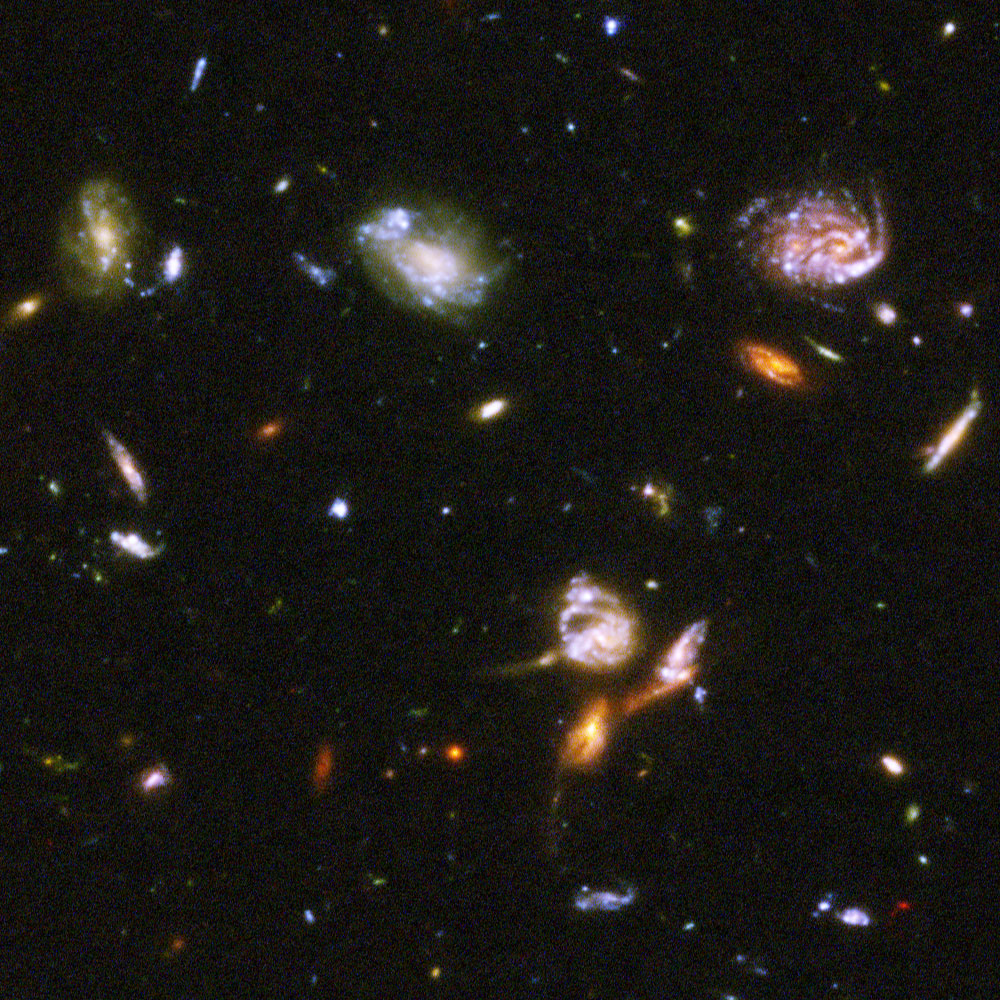
Now there are 200 to 400 billion such stars in our Milky Way Galaxy. But, as the Hubble Space Telescope has so dramatically shown us, there are at least 100 billion galaxies out there too, each with on average 200 to 300 billion stars of their own. That brings an even more bizarre fact.

When the Hubble “looks” at a galaxy at the far edge of the known universe and provides us with an image of it, that image is not one of what the galaxy looks like now. It is an image of how it looked billions of years ago! To look at such distant galaxies is to look back in time well before the creation of telescopes, before the presence of humans on earth, before even the formation of our own solar system. How strange! The telescope orbiting Earth is viewing a time prior to the existence of Earth.

Again, things aren’t always as they seem. We can’t see anything in the heavens as it “is” right now. To stand in your backyard and look up at the stars is to leave “the now.” To stargaze is to travel backward in time. But this raises yet another oddity.

Look at your favorite coffee cup again. Not only is the cup in its cup-ness more than what your eyes can perceive, but the light traveling from your cup to your eye takes time to get there. It’s a very, very short amount of time, granted. But it takes time. Therefore, you can’t even look at your own coffee cup and see its image in “the now.” It’s nearly instantaneous, yes. And you can’t perceive it as anything other than instantaneous. But it’s not instantaneous.

When you look at your cup, you are seeing an image of it as it was a fraction of a second ago. In fact, because the speed of light is finite, there is no image that you can ever perceive visually in the actual present. Everything you perceive with your eyes is in the past due to a finite speed of light. How far in the past the object is seen depends on its distance from your eye.

Because light has a speed, you see the cup in front of you as it was fractions of a second ago. You see the moon as it was one second ago. You see the sun as it was eight minutes ago. You see Saturn as it was an hour ago. You see Proxima Centauri as it was four years ago. You see distant stars in the night sky as they were 2000 years ago.

My point? This blog is a parable of perception. When it comes to seeing, perception is not reality. But what about God? Is perception reality when it comes to God?

After much study and thought, I’m convinced that at the core of Jesus’ mission was his intent to provide for us corrective lenses. He came to reveal his heavenly Father as he really is. He came to correct our perception of God.

We tend to see the Son and the Father as different, do we not? The Father is seen as distant and judging while Jesus is seen as accessible and forgiving, even though the Jesus of the Bible insists that “when you’ve seen me, you’ve seen the Father.” (For more on this, see The Un-Religion.)


This creates a rather bizarre dilemma, doesn’t it? If you are a follower of Jesus or want to be, and if you take what he says in the Scriptures seriously, then you can trust your own perception of God, or you can trust what Jesus is telling you when it comes to seeing his Father. Is Jesus’ image of his Father direct, clear, and correct, or is yours?


Thursday, August 13, 2009

The Kingdom of Heaven is Like Gravity


Although Jesus refused to come right out and say what the kingdom of heaven is, he did speak constantly about what it is like and to what it can be compared. He spoke in mysteries. You may be wondering why. Here’s one pretty cool reason.

Defining something for you doesn’t mean you experience it. Jesus was more interested in your experiencing it than in your pocketing a portable definition. To me, trying to define the kingdom of heaven is like trying to define gravity. It almost defies definition. Let me show you.

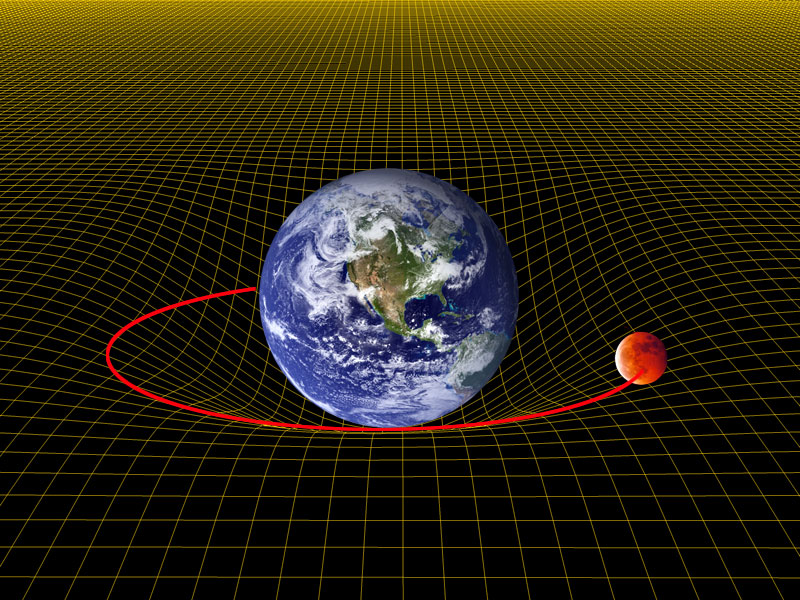
Gravity doesn’t work in a direct line between two objects like most people think. Take the earth and the moon, for example. Gravity doesn’t exist as a straight-line attraction between the earth and moon like when you whirl a ball on a string over your head.

In the illustration above, the mass of the earth warps space toward it. It is hard to imagine, which is why most illustrations of gravity use a bowling ball on a trampoline model (left), which is less accurate but easier to "get" intuitively.

Imagine the earth is a bowling ball resting on a trampoline, and its weight is bending the trampoline fabric. Now imagine rolling a golf ball, representing the moon, past the  bowling ball. What happens? If you roll it with too much force, it will fly past the bowling ball and off the trampoline. But if you roll it just right, it might “orbit” the bowling ball a time or two before falling into it. It falls into it because of friction. But what if you imagine a frictionless trampoline surface? Round and round she goes! At just the right speed, the moon neither slingshots into space nor “falls” into the earth, illustrated by a perfectly rolled golf ball on a frictionless trampoline surface. Likewise, imagine our earth is a planet orbiting our sun, and our sun is a star orbiting the supermassive black hole at the center of our galaxy, the Milky Way.

Can you see it? The trampoline represents gravity! Gravity is the fabric of spacetime bent by mass.

It is a bit counter-intuitive, but an orbit is really just something falling. The moon is falling around the earth. The earth is falling around the sun. The sun is falling around a black hole.

Imagine you’re skydiving. We call that falling. As I just suggested, gravity does not operate as a straight line force. It is fields of bent spacetime. So when you skydive, you aren’t really falling in a straight line because of an invisible magnetic-like force pulling you straight “down” to earth. You’re actually sliding down curved spacetime. You’re the golf ball wanting to “fall” directly into the bowling ball.

Can anyone actually see gravity? No. Can you observe its effects? Constantly! It is there whether you can see it or define it exactly. You experience its power whether you see or understand its substance. You interact with it and you trust it in everything you do.

If I didn’t trust gravity, I would never walk without holding onto something that would anchor me to earth. I certainly wouldn’t risk jumping! But since I trust gravity, I not only can let go of whatever I’m clinging to and walk, but I can run and jump without worry of sailing off toward Alpha Centauri.

Notice that I just did what Jesus did. I didn’t tell you what the kingdom of heaven is exactly. I spoke instead about gravity. I made gravity a parabolic analogy. The kingdom of heaven is like gravity in that it is something invisible, it is nearly indefinable, yet it is powerful, it is all around you, it has a hold on you, and it facilitates everything you do.

When I hit a grounder to the shortstop and try to run out the throw to first base, however, I’m not asking any questions. I’m just playing baseball! Yet I would not have been able to hit the ball and run out the throw if gravity were not acting on me, on the pitcher, on the ball, and on the shortstop I hit it to. Gravity, a mysterious invisible force throughout the universe, made every bit of the fun possible, though I may not have been thinking about warped spacetime as I hustled for first base.