Thursday, October 1, 2009

Pews Stink (a black and white satire)

Church pews had an innocent enough beginning in 1622, in Plymouth, Massachusetts. The Mayflower companions built a small wooden sanctuary for the purpose of Sunday worship. But chairs were few in the Pilgrim outpost. Luxuries like chairs were too difficult and time-consuming to make, and there was an unforgiving ocean between them and the nearest furniture store.


The minutes from the November 21 church council meeting that year record a unanimous decision to commission the only Frenchman in the settlement, Pepé Le Pew (unmarried), to make benches for seating in the church. Tall, straight pine trees were felled, and rough planks were hewn. The crude pine picnic-style benches were placed in straight rows in the rustic sanctuary, and they were put to use for the first time on November 27, 1622.

No, the benches weren’t comfortable, but the discomfort only lasted an hour or so, and the stoic society considered this discomfort to be congruent with their rather austere theology. They felt it their duty, even in small things, to deny the flesh, to share in the suffering of Christ, and to live a lifestyle as plain and simple and straight as the pine planks themselves. Life in Plymouth was cold and hard, and so were the benches.

All furniture in this early Pilgrim sanctuary had liturgical names. The pulpit. The altar. The baptistery. Calling these crude seats “benches” seemed too secular to the Plymouth faithful, so it was decided at a church council meeting, November 28, to call the benches “pews,” after Pepé Le Pew, the unmarried Frenchman who fashioned them.

The only controversy surrounding the church pews is recorded some ten years later. The community had grown significantly due to continuing European immigration. An unmarried Frenchwoman named Penelope Félin had immigrated alone to Plymouth that year. She brought a formal complaint and made a motion to the church council in 1632, as recorded in the minutes. She accused congregant Pepé Le Pew of unwanted advances, and she demanded that the church leadership address this outrage by removing Le Pew from the church.

When her motion failed, she made another. She noted that times had changed, and pointed out both the availability and affordability of chairs in America, and she moved that the church pews be replaced with more comfortable seating. The church council saw this as no more than sour grapes on the part of Penelope, for everyone knew that it was Le Pew who made the pews. This motion was also denied. The pews stayed. Penelope in haste packed and left Plymouth under cover of darkness. The next day, Le Pew declared his undying amour for Penelope, then packed and set out in pursuit of her.

In the years following, as more and more European Christians immigrated to America, nearby settlements built churches and made pews. They were blindly following the practice at Plymouth, ignoring the affordability and availability of chairs. In the late 17th century, every sanctuary in ..New England.. had Le Pew’s pews.

For one hundred years the pew remained in use and unchanged in America. And it is unknown when the first back rests were added to the pews for the comfort of the congregants. But it was a popular emendation, essentially turning a picnic table bench into a park bench.

Then during the 20th century, pews were accessorized. It started with the availability of hymnals. Stacking them at the end of the pews made it necessary to pass them down and pass them back. A spice rack maker in Boston attached his creations to the backs of his church’s pews and called them hymnal racks. He made a fortune. Slots for offering envelopes were added too. But a new invention, the pencil, was needed to fill out the envelopes, so new slots were designed with little wells in which to place the pencils. (The greatest accessory of all, the pew cushion, came later. Pews are pretty uncomfortable, with or without cushions. But cushions must have helped somewhat, because by 1980 most of the pews of America were cushionized.)

The wood from which the pews were fashioned was upscaled in most 20th century sanctuaries, too. Mahogany and maple were in use, making the pews both heavier and more expensive. While the cost of chairs had continued to drop, the cost of twenty-foot, quarter-ton, mahogany pews skyrocketed.


It is not clear why pews in America were, in the span of a mere decade, bolted to the floors of sanctuaries. Some reports say that fear of theft was the reason for anchoring the expensive pews. Some reports note that someone always had to straighten them after worship; people bumped and scooted them, and the pews had to be perpetually repositioned in equidistant, straight rows. One report, strangely enough, said that there was a concern that pews weren’t particularly stable when at full seating capacity, and that some legal types in a congregation in Washington D.C. were worried about law suits should one of those pews tip over backwards spilling the elderly ladies’ Sunday School class on the backs of their heads. Whatever the reason, America’s expensive, heavy, accessorized pews were screwed to the floors of nearly every church in America by 1950. The price of chairs, really comfortable ones, was at an all-time low.

Were there complaints about these fancy pew accessories in 1950? Yes. There are always those who resist change. Were there those in 1950 who, on the other hand, questioned the money spent on expensive, heavy, accessorized pews fastened to the floor, when chairs were cheaper and more comfortable, and chairs can be rearranged or removed so that the space can be employed for a wider variety of uses? Not many. For 350 years, pews had held worshipers in America. Pews had become the familiar though uncomfortable furniture of God. Prayers made from chairs? It seemed suspicious, almost unsightly.

Then a simple study was done by an obscure doctoral student in a Dallas seminary between 1999 and 2004. He tracked the population of nearly 300 churches in the Dallas metro area. Out of curiosity, he included in his data whether the worshiping communities used pews or chairs. The result was shocking. Churches with pews were losing members. Churches with chairs were growing. The statistics were dramatic. Pew churches had an 11% decrease in membership in only five years. Chair churches had an astonishing 54% increase in membership in only five years.

When the study was picked up by the Dallas media, Gallup took note. They designed a five-year study of 10,000 congregations nationwide. Among the data collected between 2004 and 2009, there was a question about seating: pews or chairs? Again the results were stunning. Pew churches nationwide declined in membership 24.5% while chair churches increased in membership by a staggering 177.5%.

Then came the now famous cover story in the nation’s largest selling Christian magazine. It explored Gallup’s findings on the pew versus the chair. As you might expect, the churches with chairs were predominantly newer congregations. The majority of them didn’t own buildings and had no need for a board of trustees. And their worship services were informal and contemporary. The averages ages? The average age of the pew churches was 65. The average age of the chair churches was 35.

Nothing in the article was so surprising, really. Church in America was changing fast. And, as the article said, there was no magic in using chairs. “Chairs don’t change churches. But it does appear that changing churches choose chairs.” No controversy or argument there. Statistics don’t lie.

The buzz wasn’t about the article, however. The buzz was about the cover photo. On the cover of the number one Christian magazine in the country was a family of three seated on the front pew of a stained-glass sanctuary. From left to right is a father, a son in his late teens, and a mother. The father, in his gray suit and black tie, is nodding off with his mouth open. The mother, in a gray dress and white pearls, is chewing on the inside of her lips, picking at her fingernails, and cutting her eyes at her son. Seated between them, the son is looking very 2009, with spiky hair and piercings and long baggy shorts. The expression on his face is a mix of frustration and yearning. But none of these things caused the buzz. The buzz was all about the teen’s T-shirt.

The son’s T-shirt is white. There is a cartoon character on the front, and beneath this cartoon character are two words. This cartoon character and those two words in bold black letters are considered by some to be the 21st century equivalent of the 95 theses said to have been nailed by Martin Luther to the door of the Wittenburg Chapel, October 31, 1517. The T-shirt may not have sparked a modern-day reformation, but it galvanized it.

Now that it’s the year 2059, the church looks back fifty years on that iconic magazine cover from 2009 as the beginning of the end of traditional Christian worship in America. Yes, traditional worship continues today, but the faithful in the pews are few, now only about 2% of Christian worshippers. You can add a back rest to a pew. You can accessorize a pew. You can cushion a pew. But the pew will always be the pew: a heavy, immovable, uncomfortable bench that would not go away even when better and cheaper seating was available.

The Plymouth church should have listened to Penelope Félin in 1632 when she made the motion at the church council meeting to replace the uncomfortable pews with chairs. Whatever happened to her? No one knows. And Pepé Le Pew, what of him? He also disappeared from history. Their names, however, resurfaced around 1950, at about the same time that pews were being bolted to church sanctuary floors. Two cartoon characters, a skunk named Pepé Le Pew and a cat named Penelope Pussycat (Félin in French), became favorites of children and adults.

I don’t need to tell you who the cartoon character was on the front of that teenage boy’s T-shirt. Everyone knows today. But for the sake of thoroughness and posterity, I record it here. Seated on a pew between a dozing father and a nervous mother, a frustrated and yearning teen wears a white T-shirt. On the front of the T-shirt is a cartoon skunk named Pepé Le Pew, and he is lounging atop two words that changed Christian worship for the better. And those two words were . . .

    PEWS STINK!
  To be sung to the tune of "Love Stinks" by the J. Geils Band


You might consider this blog on pews a parable. Here are other analogies, some of which are parables: What Color Is a Green Apple?The Kingdom of Heaven is Like GravityA Guitar Hero Parable, and A Country Fried Parable.

For Jesus' parables see The Absurd Parable of the Unforgiving SlaveThe God Who GamblesParable of the Vine and BranchesThe Crooked ManagerThe Friend at MidnightHeaven Is Like a Crazy FarmerHe Speaks Of . . .Salted With FireTalking Sheep and GoatsIs Your Eye Evil?Two Prodigals and Their Strange FatherThe Lazarus Parable Is Not About the Afterlife,and Jesus Used Parables Like a Sieve.

Thursday, September 24, 2009

Where is my grandmother (1908-2007)?


Photo of “Minkie,” late 1990s, with clockwise from left: me, bro Mike, sis Susan, bro Bill


I no longer have any living grandparents. Homer Gary died of pneumonia in 1936 so, sadly, I never knew him. Gussie Gary died at the age of 96 in 1992. Bob Segers died of a heart attack at the age of 82 in 1986. And Susan Segers died in her sleep shy of her 100th birthday on November 1, 2007.

As firstborn grandkids often do, I nicknamed my grandmother. I was a toddler. I’d been to the doctor, and he had a picture of Mickey Mouse on the exam room door. I got Mickey Mouse and Grandma mixed up in my little brain, and I called her Minkie Ma. The name Minkie stuck. (Or should I say Susan Segers got stuck with the name Minkie?)

Everyone reading this has likely lost a loved one. And we Christians have attended funerals where bold assertions are made about where our deceased loved ones are right now. That’s what I want to write about here. And I want to make it personal. I want to ask the question, Where is Minkie right now?

Because we’re all stuck here in the flow of time, there seems to be a time gap in our Christian belief in resurrection on the last day, doesn’t there? It is a gap between our deaths and our future resurrections. This time gap has bothered Christians for centuries, and many explanations have been invented to account for it.

Keeping it personal, Minkie passed away in 2007. Her resurrection will occur on the last day, according to Scripture. But what about the meantime? What about now? If my grandmother is dead and buried, where is she until* the resurrection of the dead on the last day promised by Jesus?

1. Is her soul dead, too, until* resurrection day?


2. Is her soul asleep until* resurrection day?

3. Did her soul leave her body and go to an “intermediate heaven" until* resurrection day? (see my other blogs: Paul didn’t go to heaven; The psychic medium of Endor was a fake; and The soul doesn’t leave the body at death)

4. Did her soul get an “intermediate body” (a loaner body?) to wear until* her buried body can be resurrected and her soul reunited with it? (The loaner body must be disposable.)

5. Did her soul go to Purgatory to wait and to be purified until* resurrection day?

6. Did her soul go to Limbo to remain a wanderer or be punished until* resurrection day?

*UNTIL - a temporal term you have to use if you think of time in Newtonian terms.

None of these six imaginative inventions are in Christian scripture. I want to take a fresh look at the question of where the dead are right now. I want to propose that we look at time differently—a way that makes none of these biblically foreign inventions (1-6 above) necessary. And, strangely enough, Albert Einstein helps us see a biblical answer to our question.

Is there a tiny span of time when it seems to me experientially that Minkie is in the ground and nowhere else until the resurrection day promised by the Bible? Yes. But the important word is "seems" from an eternal, biblical perspective and from Einstein’s perspective, which “coincidentally” agrees. 

I admit, here in the seeming flow of time, Minkie is seemingly no where else but in the ground, body and soul. That is, of course, not a very comforting prospect for me, as one who loved her. But I don’t believe that it’s true. Albert Einstein’s mind-blowing explanation of time, believe it or not, which most people have never heard or understood, illustrates a biblical view of time.

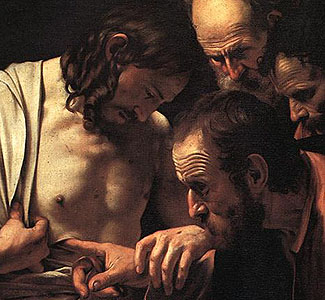
From Einstein’s paradoxical perspective, Minkie is a toddler learning to walk right now, she’s giving birth to my mother right now, she’s being nicknamed by me right now, she’s burying Papa right now, she’s dying in the nursing home right now, and she’s risen with the Lord at the future general resurrection promised by Scripture right now.

Each of these Minkies, every Minkie-moment, if you will, is literally in the spacetime loaf of our universe, all past moments, the present moment, and all future moments. All there. All happening. All real. In God’s universe, the one Einstein tried to explain to us Newtonian terrestrials, everything is happening.

Moses and Elijah, for example, visiting Jesus at the transfiguration are not ghosts, Scripture insists, but are men who are glorified. That means that they are resurrected human beings. But if the resurrection of the dead is a future event, how could Moses and Elijah already be raised? It’s because the resurrection slice is in the universe-loaf from the beginning. These glorified men not only visited from somewhere else. They visited from some-when else.

You can’t think chronologically to see this. You have to try to see the whole. Resurrection seemed like a "not yet" moment at the time to Peter, James, and John on that mountain with the glorified (resurrected) Moses and Elijah and Jesus standing before them. But the “not yet resurrection” revealed its truth to them by breaking into their present from the future.

Resurrection day seems like a “not yet” moment to us now too, an event disconnected from us in a distant, unknowable future. But from God’s universal eternity, and in Einstein’s universe that IS, a universe that IS happening, a universe that IS whole and complete, the future resurrection has happened, is happening, and will happen. It was and is and is to come, now and forever.

I’m going to give an analogy that helps me, but first, here is a key insight from what Einstein has taught us. Our universe does not just contain every where. It also contains every when, including (if you believe Scripture) the future resurrection day. Space (all wheres) and time (all whens) are inseparable. If all wheres exist, then all whens must exist, because space and time are one thing designated by one word: spacetime. Our universe is spacetime. Everywhere and everywhen compose our physical universe.

In spacetime, however, we creatures are only wired to experience one "now" at a time in the seeming flow of chronological time. But time doesn't really flow. Your past is really still here in our universe, not just a memory. Your future is here in our universe, though you haven't experienced it yet. Our universe includes all space and all time.

Here’s an illustration that helps me visualize this. Picture a movie theater strip on a platter (a horizontal reel—pictured), let’s say the movie Titanic. Here are Jack and Rose in a single frame from the movie.

We experience a movie one frame at a time as it passes in front of a projector lamp. But that doesn't mean that every frame we've already seen isn't still sitting up in the projection booth on a platter (pictured). Nor does it mean that every frame we're about to see isn't sitting up there in the projection booth on another platter. The movie, every frame, is whole and complete up there, but we can only experience it now-frame by now-frame. 

We experience time like this because of our human, creaturely, design limitations. But the risen Jesus has no such limitations in the Bible. Neither does anyone resurrected. As the Apostle Paul insists, we will be like him in resurrection, and the risen Jesus is not bound by space and time.

Do you see the problem? Just because we perceive the universe one “highlighted now” at a time, argue physicists, does not mean that the universe exists in this way.

It flies in the face of our experience, but the physical universe appears to be one big present mega-moment. What we call past, present, and future all resound equally together across the vastness of all space and time. The Loaf shows no partiality to any one moment. It is we who do that. All nows are equal in the eyes of the universe. It is not so for us. That seems to be because we are designed to experience one note at a time. With one note at a time, we can we hear the melody. Without it, all the notes blare at us in unison dissonance.
 
So the universe is complete. Everything is happening in here. We live in a vast “eternal now.” And there are many "you moments" in our universe, all of them you, and all of them real, from your birth to your death to your resurrection.

Have you ever wondered, How can the risen Lamb of God be slain from the foundation of the world if the crucifixion and resurrection didn't happen until around 30 AD? It sounds contradictory. This biblical claim flies in the face of a conventional view of chronological time.

If the universe contains every when, however, then what we believe is the key event in the history of the universe---the crucifixion and resurrection of Jesus---is the key "now" among all nows that exist from eternity---from Alpha to Omega. A man born around 8 B.C. and executed around 30 A.D. is slain from the foundation of the world? Scripture says yes.

The reason that Jesus can be "slain from the foundation of the world" is because the whole of the universe (past, present, and future) came into existence whole. When the universe came into existence, it wasn’t just all wheres that came into existence. All whens came into existence too, including the crucifixion. The crucifixion of Jesus, the pivotal moment in our universe as we Christians see it, was and is and always will be present to the whole. It’s the linchpin moment in a forever-complete salvation-history.

From this perspective, the crucifixion-now can be seen as "simultaneous" with the creation-now and with the last-day-resurrection-now. They're all here together in the spacetime loaf, the complete physical universe, all whens from beginning to end are just here.

Consider this the key point: I see no problem with what Jesus means when he speaks from the cross, "Truly I tell you, today you will be with me in Paradise. ”Luke 23:43) The Lord is present to every day in the universe. They are all his simultaneous todays. And when we experience our death-nows as he did, we "skip" or "fast-forward" instantaneously to our joint resurrection-now with him. Therefore, the today of our deaths is literally the today of our resurrections. ( That's because from a heavenly perspective as well as an Einsteinian perspective, both days (like all days) are eternally simultaneous.

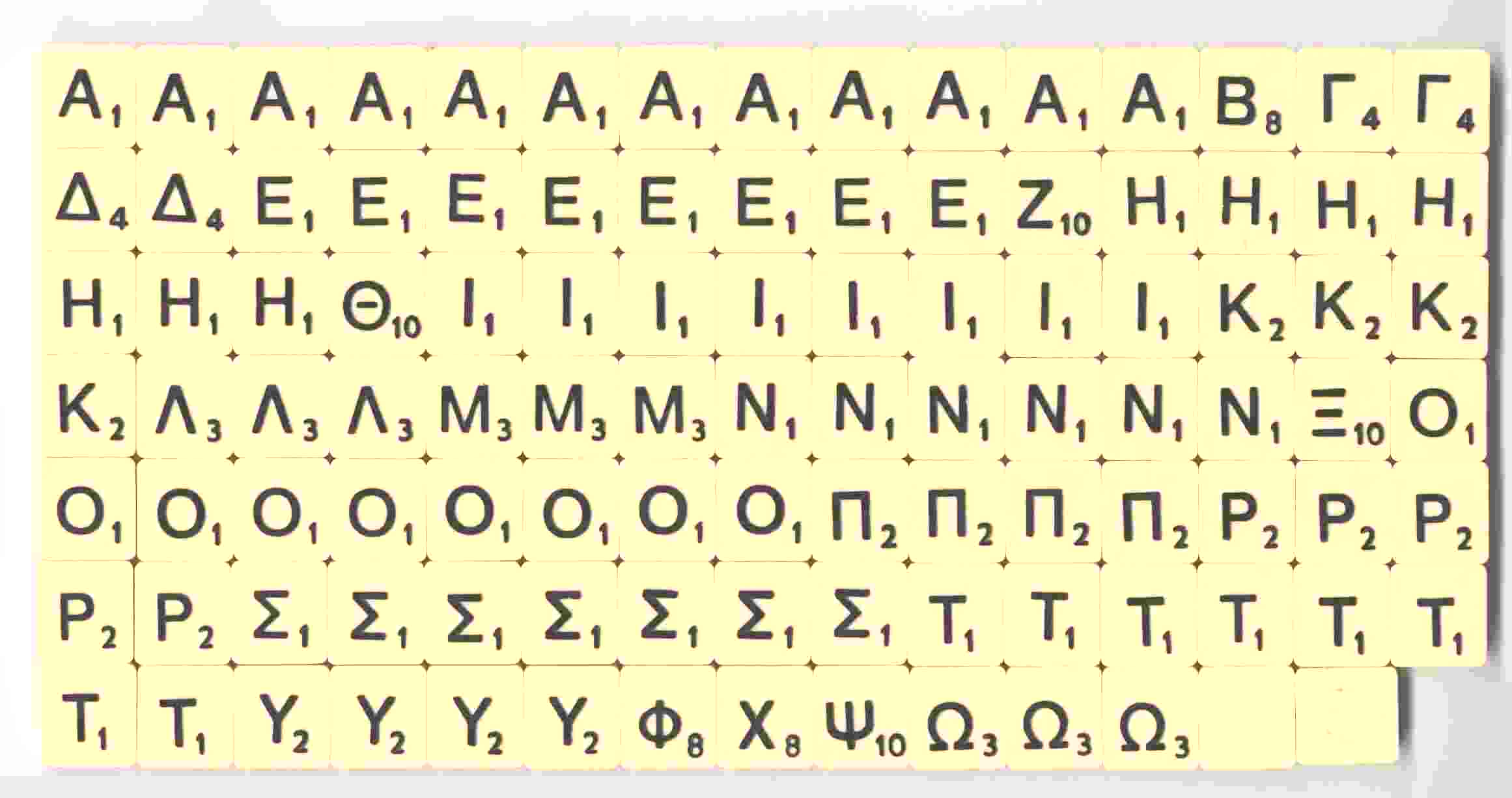
So when resurrection-Jesus popped in on the disciples behind locked doors, he wasn't just appearing from some-where else. He was also appearing from some-when else: the future resurrection of the dead. He transcended space and time to appear to his friends. He transcends spacetime still. He reigns over all spacetime in his kingdom of heaven. He is the resurrection. He is the Alpha (A) and the Omega (W....).


All this is to say that Minkie, the finest Scrabble player who ever lived, is both in the ground and alive forevermore at the future resurrection of the dead. She is dead yet alive. The kicker is, if the Bible and Einstein are correct about creation, then in our universe right now I am at the future resurrection of the dead with Minkie too, and so are you.


Saturday, September 19, 2009

The Only Functional Family

Admit it. You have to have it. You look for it everyday in the face of your spouse or in the face of a stranger. It’s something that’s nearly impossible to find, it’s something you cannot keep, and yet your radar is on high alert for it all day long.

You need relational union, and you’re lying to yourself if you think you don’t. Blissful, intimate union. It’s what you have to have.

But here’s the crazy part. I’m fifty years old, and I’ve rarely had it, yet I still look for it every day. No matter your age, you’ve rarely had it. Yet you’re craving it right now like it is right around the corner. You desperately need “this thing” that you’ve rarely experienced, if ever. And even if you’ve experienced it, you know that it doesn’t last. So here’s my simple question:

Why is it that you forever hunger for a relational union and bliss that you have rarely experienced and that never lasts?

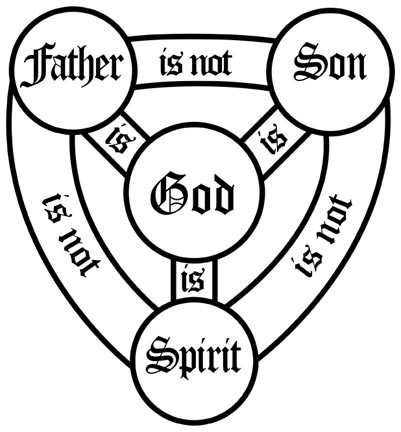
There are biological, chemical, anthropological, sociological, and psychological answers to this question. Let me try a theological answer—by that I mean, an answer that begins with God, in whose image we are said to have been created. In the Bible, God is three persons in utter union. Maybe that’s not a coincidence.

If it is true that God is three in union, three persons yet one substance, then our being created in God's image has a profound implication for our question about relational union and why we need it.

If three-in-union is God's image, and if we are created in this image, then perhaps we are wired at the factory (as a friend of mine once put it) for union in relationship. Is this possible? If so, then it raises powerful questions.


Could that be why our broken relationships almost drive us to despair, because they violate the relational union in whose image we were created? Could that be why our relationships hurt us so badly, because we are wired for union, desire union, and seek union, all because we are created in the image of the Tri-union of the Tri-unity?

When it comes to my broken relationships (and human relationships are always broken), I get tantalizingly brief glimpses of the union that exists between Father, Son, and Spirit. "They" know they are distinct persons with no blurred lines and no unhealthy enmeshments—what some psychologists call codependences. But humans are prone to codependent, invasive, relational enmeshment, and that’s not healthy union.

It’s infuriating that I cannot catch and keep this experience of healthy union, no matter how much I desire it and no matter how hard I try to sustain it. It always slips through my fingers. I lose my healthy sense of self by letting myself be used or abused by others, including those who really love me. But, of course, I end up using and abusing them too, though I don’t want to. No matter how much I wish it to be otherwise, the healthy union that I MUST HAVE cannot be self-created or self-sustained. It is delusional for me to think otherwise.

The union we see in the Trinity, however, is both healthy and sustained. Throughout the NT Jesus is crystal clear who he is, a very strong sense of self, clear that he is not the Father or the Spirit, but also clear that the Three are One. The Three Musketeers is a “literary type” of this ideal tri-union. “All for one and one for all.” I might add, “All the time.”


I realize that the word Trinity is an oxymoron. It’s an utter contradiction, at least by human reckoning. Tri- means three and –nity (unity) means one. How can three be one? How can one equal three? This is the mystery of God’s very image in the Bible. God is the great Three who are One. Tri-unity. How can we even begin to make sense of this? Perhaps there is a way.

Marital intimacy is a reflection of the union in the Tri-unity, though we manage to screw it up, of course. It's a sin thing. It's our human dis-ease that we lose our sense of self, that we try to recover it in needy manipulation, and that we use one another for selfish purposes. Yet, every once in a blessed while, the union we are wired for is blissfully experienced and enjoyed. We get a glimpse now and again when “the two become one.” The perfect union that I (and undoubtedly you) yearn for cannot be sustained, however, even in the healthiest of marriages, as you are probably painfully aware.

 
How do I describe this perfect union? It fully protects and affirms my unique selfhood while connecting me with other selves in mutual joy, love, and respect that affirm their unique selfhoods. No blurred lines. Healthy boundaries. Embracing and being embraced without invasion. Loving others fully as much as you love yourself. Willing to lay your life down for a friend.

Have I been able to do this or experience this in my lifetime? Yes and no. I live in hope that I'm getting better at loving and respecting and serving others, and live in hope that the union that Jesus says is mine really is mine, even though I don't always feel it and I often mess it up. I choose to believe that my promised union with Christ on resurrection day will fulfill my lifelong yearning for union with him and with humanity, and that this same promise can help me grow in this love in the here and now.

Are all families dysfunctional? All but one, as I see it. The only functional "family" is the Father, Son, and Spirit, and this union is ours by the biblical new covenant promise. In Jesus' flesh we are adopted into this functional family. Faith is required, however, to trust that this union is yours when your wrecked relationships are telling you otherwise. The spirit is willing, but the flesh is weak.

The Bible, however, is not nearly as negative about flesh as is often portrayed. Is it weak and flawed? Yes. But all things were made in, by, for, and through Jesus, the incarnate Word of God. This means that Jesus created flesh, if you believe the Bible. And John's Gospel makes a point of saying that the one who created flesh became flesh.

The biblical Greek word is sarx. Flesh. God became sarx, flesh, like you and me, feeling everything we feel, experiencing fully the same weaknesses and temptations we feel. How could Jesus save all flesh (which he made) unless he became fully flesh? This was God's plan from the foundation of the world.

A husband and wife becoming "one flesh" is not a bad thing, is it? It's a union blessed by the Tri-union God. And Jesus came to save all flesh. And all flesh shall see it together. Jesus was born in the flesh, embracing our flesh, and taking all flesh to the right hand of his Father through his death, resurrection (of his flesh!), and ascension. If these biblical claims are true, then what is the result?


Jesus is forever human: Resurrected flesh and bones.

Luke 24:39 Look at my hands and my feet; see that it is I myself. Touch me and see; for a ghost does not have flesh and bones as you see that I have."

He said the bread that he gives to the world is his flesh. Is his flesh evil? No, it's a sacrament! It's sacred! In Romans 8 Paul wrote:

Romans 8:3 For God has done what the law, weakened by the flesh, could not do: by sending his own Son in the likeness of sinful flesh, and to deal with sin, he condemned sin in the flesh,


Jesus didn't condemn flesh. He became flesh to deal with sin and death in the flesh.

Hebrews 2:1-15; 17-18 Since, therefore, the children share flesh and blood, he himself likewise shared the same things, so that through death he might destroy the one who has the power of death, that is, the devil, 15 and free those who all their lives were held in slavery by the fear of death. 17 Therefore he had to become like his brothers and sisters in every respect, so that he might be a merciful and faithful high priest in the service of God, to make a sacrifice of atonement for the sins of the people. 18 Because he himself was tested by what he suffered, he is able to help those who are being tested.

What this means is that the God of the universe chose to unify us with him in the flesh. Rather than blending us together like a drop of water blends into the ocean, God chose a union in the flesh that defends unique, personal identity forever.

Is the image of God in which we are created a relational Tri-union of distinct persons? Is that why we're wired for relationship and yearn for union with someone, with something, with Father-Son-Spirit? Is God’s coming to us in human flesh our adoption into the only functional family? I have come to believe that the answer to each if these questions is yes.

If I am correct, then why do adherents of the world's monotheistic religions, including Christianity, prefer a solitary god, a monad, a remote singularity? And how can a deity who knows no relationships have made us, or even want to make us? For what purpose? How can a mono-god whose image is non-relational create humans wired for relationship? Why would a self-contained uni-god create relationships, much less desire union with lowly, needy creatures like us?


What if the answer to this mystery is that God passionately desires to enlarge his Triune Family by including us and by wiring us to yearn for that inclusion? What if now, in the flesh, we are included in The Only Functional Family, The Relationship behind all relationships, The Family in whose image we are made, and The Union---blissful and passionate---that we desperately desire in our heart of hearts?